A Guide on How to Collaborate With Other Artists
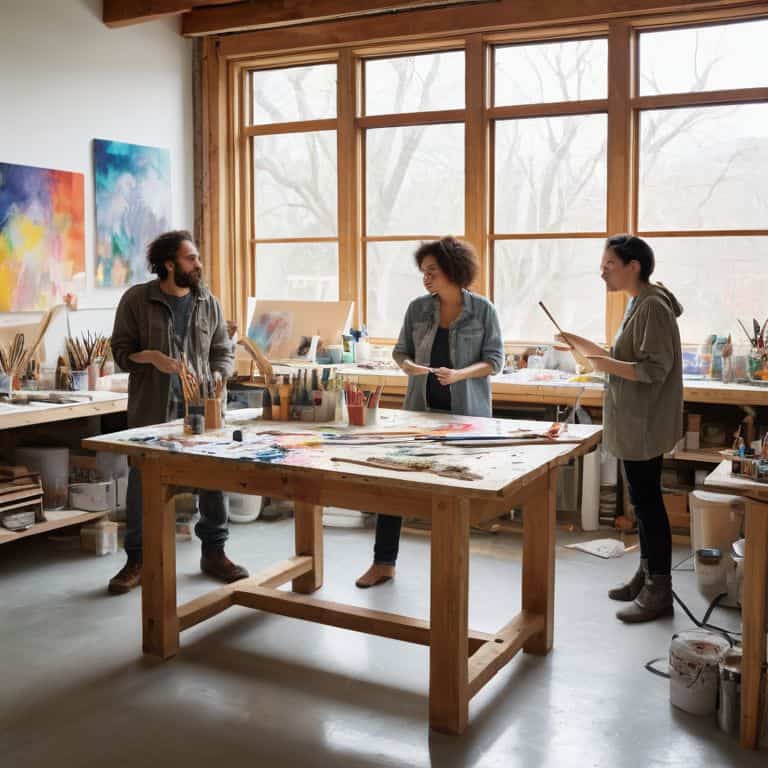
As I sit amidst the chaos of my art studio, surrounded by half-finished projects and scattered notes, I’m reminded of the elusive dream of _seamless collaboration_. We’ve all been there – eager to embark on a creative journey with fellow artists, only to find ourselves lost in a sea of conflicting visions and misunderstood intentions. The truth is, how to collaborate with other artists is a question that has haunted many a creative soul. It’s a puzzle we’ve all tried to solve, often with mixed results. I recall my own experiences as a curator, where the most breathtaking exhibitions were born from the beautiful mess of collaborative efforts.
In this article, I promise to share with you the _unvarnished truth_ about collaborating with other artists. You won’t find any formulaic advice or unrealistic expectations here. Instead, I’ll guide you through the real, often messy process of how to collaborate with other artists, with all its twists and turns. From navigating different personalities to embracing the happy accidents that can arise from creative disagreements, I’ll offer you practical, honest advice to help you make the most of your collaborative endeavors. So, if you’re ready to dive into the beautiful, chaotic world of artistic collaboration, let’s embark on this journey together.
Table of Contents
- Guide Overview: What You'll Need
- Step-by-Step Instructions
- Collaborating With Artists
- Nurturing Creative Synergies: 5 Tips for Thriving Artist Collaborations
- Embracing the Beauty of Collaborative Chaos: 3 Key Takeaways
- The Beauty of Collective Chaos
- Embracing the Beauty of Collaborative Chaos
- Frequently Asked Questions
Guide Overview: What You'll Need
Total Time: 2 hours to several days
Estimated Cost: little to no cost, depending on the project scope
Difficulty Level: Intermediate
Tools Required
- Computer with internet connection for communication and collaboration
- Project Management Software for organizing tasks and deadlines
- Video Conferencing Platform for virtual meetings
Supplies & Materials
- Art Supplies varies depending on the project medium (e.g., paints, canvases, cameras)
- Notebook for brainstorming and idea development, approximately 8 inches by 10 inches in size
Step-by-Step Instructions
- 1. First, let’s start by embracing the unknown and being open to new experiences. When collaborating with other artists, it’s essential to let go of your ego and be willing to listen and learn from others. This means being receptive to feedback, suggestions, and even criticism. Remember, the goal of collaboration is to create something new and exciting, not to impose your own vision on others.
- 2. Next, find artists who share your creative frequency. Look for individuals who have a similar style, tone, or theme in their work. This will help you connect with them on a deeper level and ensure that your collaboration is authentic and meaningful. You can find potential collaborators at art exhibitions, online forums, or social media platforms. Don’t be afraid to reach out and introduce yourself – the worst that can happen is that they say no.
- 3. Once you’ve found your collaborators, it’s time to set the stage for a successful collaboration. This means discussing your goals, expectations, and boundaries with each other. Be clear about what you hope to achieve, how you’ll work together, and what you’re comfortable with in terms of feedback and criticism. This will help prevent misunderstandings and ensure that everyone is on the same page.
- 4. Now, let’s talk about the art of communication. Effective communication is key to a successful collaboration. Make sure to listen actively, ask questions, and clarify any doubts or concerns you may have. Be respectful and empathetic towards your collaborators, and remember that you’re all working together towards a common goal. Don’t be afraid to share your thoughts, ideas, and feelings – this is a collaborative process, after all.
- 5. As you begin working together, expect the unexpected. Collaborations can be unpredictable, and things may not always go as planned. This is where the magic happens, and you’ll often stumble upon happy accidents that can take your work in exciting new directions. Be open to surprises, and don’t be too hard on yourself if things don’t turn out as expected.
- 6. Next, establish a creative rhythm that works for everyone. This may involve setting regular meetings, sharing work-in-progress, or establishing a system for feedback and critique. Find a rhythm that allows you to stay focused, motivated, and inspired, and be willing to adjust it as needed. Remember, collaboration is a dynamic process, and you need to be flexible to make it work.
- 7. Finally, celebrate your successes and learn from your failures. Collaboration can be a powerful way to grow as an artist, and it’s essential to acknowledge and celebrate your achievements along the way. Don’t be too hard on yourself if things don’t work out – instead, use these experiences as opportunities to learn and grow, and remember that failure is an essential part of the creative journey.
Collaborating With Artists
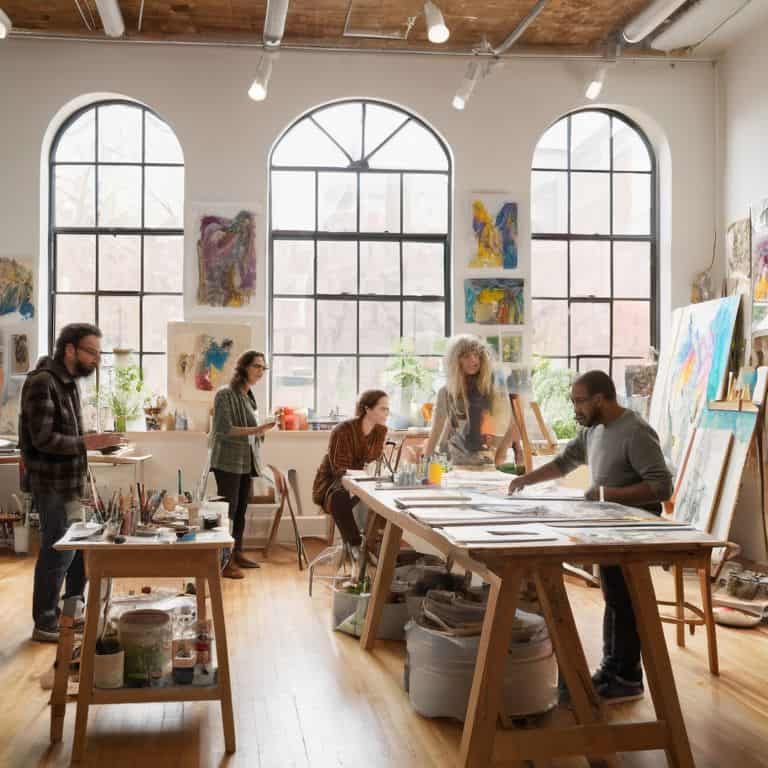
As I reflect on my own experiences visiting artist studios, I’ve come to realize that building a creative network is essential for fostering meaningful collaborations. It’s about surrounding yourself with like-minded individuals who inspire and challenge you to grow. When working with other artists, effective communication is key to bringing your collective vision to life. This means being open to feedback, actively listening to each other’s ideas, and finding common ground to move forward.
In my book on the daily habits of famous artists, I discovered that many creatives found finding inspiration in collaborative work to be a powerful catalyst for their own projects. By embracing the diverse perspectives and skills that each artist brings to the table, you can unlock new avenues of innovation and creativity. Whether you’re working in-person or utilizing online platforms for artist collaboration, the goal is to create an environment where everyone feels valued and empowered to contribute.
As you navigate the complexities of collaborative work, it’s essential to establish clear boundaries and expectations. This means setting boundaries in creative partnerships to ensure that each artist’s vision and voice is respected. By doing so, you can avoid potential conflicts and focus on creating something truly remarkable together. When managed with care and attention, these partnerships can lead to managing different artistic personalities in a way that celebrates your unique strengths and weaknesses, ultimately resulting in a richer, more nuanced artistic expression.
Building Networks With Open Communication
As I reflect on my own experiences visiting artist studios, I’ve come to realize that open communication is the foundation of any successful collaboration. It’s about creating a space where ideas can flow freely, without fear of judgment or criticism. I recall a conversation with a painter who shared with me the importance of “happy accidents” in her creative process – those unexpected moments where mistakes become serendipitous discoveries. By embracing this mindset, we can foster an environment where artists feel empowered to share their thoughts, and where collective creativity can thrive.
Through my work as a curator, I’ve seen firsthand how open dialogue can lead to innovative and unexpected outcomes. By listening deeply to one another, artists can tap into each other’s unique perspectives, sparking new ideas and inspiration. As the renowned artist, Paul Klee, once said, “Art does not reproduce the visible; rather, it makes visible.” By building networks with open communication, we can unlock the full potential of our collective creativity, giving rise to something truly remarkable.
Finding Inspiration in Messy Collaborations
As I reflect on my own experiences visiting artist studios, I’m reminded that the most remarkable works often emerge from the unlikeliest of places – a happy accident, a misplaced brushstroke, or an unexpected conversation. It’s in these messy, unscripted moments that true innovation occurs. I recall a particular studio visit where an artist’s careless spill of paint led to a stunning, unplanned texture that became a hallmark of their style. Such moments remind me that inspiration can be found in the beautiful chaos of collaboration.
In the midst of a messy collaboration, it’s essential to remain open to the unexpected. As the Japanese proverb goes, “Fall down seven times, stand up eight.” It’s in these moments of uncertainty that we discover new paths, new ideas, and new inspiration. By embracing the unknown, we allow ourselves to tap into the collective creativity of our collaborators, leading to something truly remarkable.
Nurturing Creative Synergies: 5 Tips for Thriving Artist Collaborations
- Let go of your need for control and perfection, allowing the beauty of unexpected outcomes to emerge from the collaborative process
- Practice active and empathetic listening, seeking to understand the unique perspectives and working styles of your fellow artists
- Cultivate a culture of open communication, where constructive feedback and criticism are welcomed as opportunities for growth and refinement
- Schedule regular ‘happy accident’ sessions, where you and your collaborators intentionally experiment and improvise, freeing yourselves from the constraints of predetermined outcomes
- Prioritize building genuine relationships with your fellow artists, recognizing that the most fruitful collaborations often arise from a foundation of mutual respect, trust, and camaraderie
Embracing the Beauty of Collaborative Chaos: 3 Key Takeaways
I’ve learned that the most unforgettable collaborations are those that embrace the unpredictable nature of the creative process, where ‘happy accidents’ and open communication become the catalysts for something truly remarkable
The delicate art of building networks with fellow artists lies not in forced productivity, but in genuine connections, shared passions, and a willingness to listen and learn from each other’s unique perspectives and experiences
By viewing collaborations as opportunities for growth, rather than mere transactions, we can tap into the collective genius of our community, and in doing so, create works that are greater than the sum of their parts, reflecting the beauty of our shared human experience
The Beauty of Collective Chaos
In the tangled dance of collaboration, we find the hidden harmony of creative discord, where the messy beauty of disparate voices and visions converges to give birth to something entirely new, and wondrously, our own.
Genevieve Croix
Embracing the Beauty of Collaborative Chaos
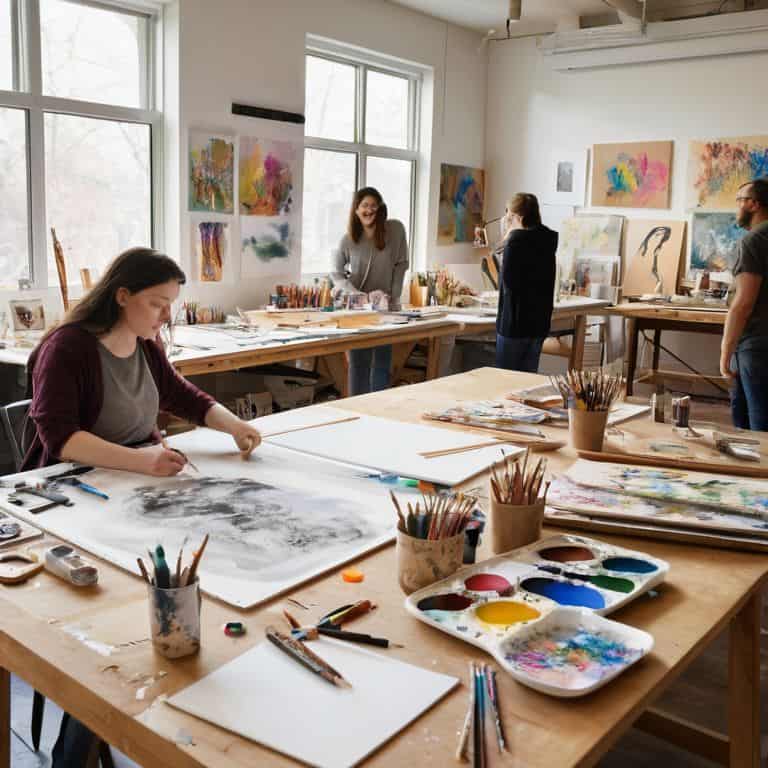
As we’ve explored the world of collaborating with other artists, we’ve seen that it’s all about embracing the unknown and finding inspiration in the messy, beautiful moments that arise from working together. We’ve discussed the importance of building networks with open communication, and how this can lead to unexpected breakthroughs and new ideas. By being open to the happy accidents that can occur when creative minds come together, we can tap into a deeper level of innovation and artistry. Whether it’s through finding inspiration in the work of others or learning to navigate the challenges that arise in collaborative projects, the key is to stay flexible and receptive to the flow of ideas.
So as you embark on your own collaborative journey, remember that the true magic lies not in the end result, but in the process itself. It’s the laughter, the tears, and the late-night conversations that shape the art and make it truly unforgettable. By embracing the beauty of collaborative chaos, you’ll not only create something remarkable, but you’ll also grow as an artist and a person, and that’s the greatest masterpiece of all.
Frequently Asked Questions
How do I handle creative disagreements with my collaborator without compromising the project's vision?
When creative disagreements arise, I remind myself that friction can spark innovation. Take a step back, breathe, and listen to your collaborator’s perspective. As the great artist, Paul Klee, once said, “One’s own creativity sows the seed of the other’s.” Embrace the tension, and let it fertilize your collective vision.
What are some effective ways to establish clear communication and expectations when working with artists from different disciplines?
When working with artists from different disciplines, I’ve found that open and honest dialogue is key. Set clear expectations by discussing project goals, timelines, and individual roles. Regular check-ins and active listening can help prevent misunderstandings, allowing you to navigate the creative process with empathy and understanding.
How can I ensure that all collaborators receive fair credit and recognition for their contributions to the final piece?
To ensure fair credit, I always advise collaborators to establish a clear understanding of roles and contributions from the outset. This can be as simple as maintaining a shared journal or log of the creative process, where each contributor can document their ideas, edits, and revisions.