A Guide to Street Photography: Capturing Candid Moments
I still remember the day I left my corporate job to pursue my passion for photography, and how it led me to create a documentary photo series that took me to the streets of various cities. That’s when I realized the importance of a guide to street photography – it’s not just about capturing images, but about telling the stories of the people and places you encounter. As I developed my film in my darkroom, I began to notice the beauty in the everyday moments, and how the golden hour could transform even the most mundane scenes into something magical.
As you embark on your own street photography journey, I want to share with you the honest, no-hype advice I’ve learned along the way. In this article, I’ll take you through the process of mastering the art of observation, and how to use your camera to capture the essence of a city and its people. You’ll learn how to anticipate and react to the fleeting moments that make street photography so unique, and how to use available light to add depth and emotion to your images. By the end of this guide, you’ll be equipped with the skills and confidence to take your street photography to the next level, and to tell the stories that need to be told.
Table of Contents
- Guide Overview: What You'll Need
- Step-by-Step Instructions
- A Guide to Street Photography
- Uncovering the Rhythm of the City: 5 Essential Tips for Street Photography
- Key Takeaways for Mastering Street Photography
- Street Photography Wisdom
- Embracing the Art of Street Photography
- Frequently Asked Questions
Guide Overview: What You'll Need
Total Time: 2 hours to several days
Estimated Cost: $500 – $2000
Difficulty Level: Intermediate / Hard
Tools Required
- Digital Camera (with good low-light performance)
- Lenses (wide-angle and prime)
- Tripod (optional)
- Extra Batteries (for long shooting sessions)
- Memory Cards (with sufficient storage capacity)
Supplies & Materials
- Camera Strap
- Rain Cover (for protection in wet conditions)
- Notebook and Pen (for recording shots and notes)
Step-by-Step Instructions
- 1. First, let’s talk about understanding your camera, because knowing its ins and outs is crucial for capturing those fleeting moments on the street. I always shoot in manual mode, which gives me complete control over the exposure, aperture, and shutter speed. It might seem daunting at first, but trust me, it’s worth learning. Spend some time getting to know your camera’s settings and practice using them until it becomes second nature.
- 2. Next, we need to discuss the importance of light in street photography. I’m obsessed with the quality of light, especially during the golden hour, when the sun is low on the horizon, casting a warm, soft glow over everything. This is the perfect time to capture portraits that are full of depth and emotion. Look for interesting shadows, highlights, and textures that can add depth to your images.
- 3. Now, let’s get into the nitty-gritty of composition. When it comes to street photography, I believe that less is often more. Avoid cluttering your frame with too many subjects or distractions. Instead, focus on a single person or scene that tells a story. Use the surroundings to your advantage – look for interesting backgrounds, leading lines, or framing elements that can add context to your image.
- 4. To capture the unposed moments that make street photography so compelling, you need to be patient and observant. I like to blend in with the crowd, camera at the ready, and wait for that perfect moment to snap a photo. It might be a glance, a gesture, or a fleeting expression – these are the moments that reveal the true character of your subject. Remember, the best portraits are often the ones that are unscripted and unposed.
- 5. As you’re walking around, keep an eye out for interesting characters and stories. Street photography is all about capturing the beauty in the everyday, so don’t be afraid to approach people and ask if you can take their picture. I always try to connect with my subjects on a personal level, even if it’s just for a brief moment. This helps to create a sense of intimacy and authenticity in the photo.
- 6. Now, let’s talk about equipment. While you don’t need the most expensive gear to take great street photos, having a good prime lens can make a big difference. I’m a fan of vintage camera lenses, which can add a unique character to your images. Experiment with different lenses and see what works best for you – and don’t be afraid to get creative and try new things.
- 7. Finally, practice, practice, practice is key to improving your street photography skills. The more you shoot, the more you’ll develop your eye and learn to anticipate those special moments. Don’t be discouraged if your photos aren’t perfect at first – it takes time and patience to develop your unique visual style. Keep shooting, and most importantly, have fun and enjoy the process of learning to see the world in a new way.
A Guide to Street Photography
As I walk through the city, I’m constantly on the lookout for capturing candid moments that reveal the true essence of the urban landscape. It’s not just about pointing my camera at a scene, but about anticipating and waiting for the right moment to click the shutter. This is where understanding the fundamentals of photography, such as aperture, comes into play. By shooting in manual mode, I can control the amount of light that enters the lens, allowing me to create a sense of depth and dimension in my images.
When it comes to street photography equipment for beginners, I always recommend starting with a simple and versatile lens. A 50mm or 35mm lens is ideal for capturing the urban landscape, as it allows for a wide enough view to take in the surroundings while also providing enough compression to create a sense of intimacy. Additionally, these lenses are often relatively small and lightweight, making them easy to carry around for extended periods of time.
At night, the city takes on a whole new character, and nighttime street photography techniques require a different approach. I love shooting during the golden hour, just before sunset, when the light is soft and warm. However, as the sun dips below the horizon, I have to adjust my settings to compensate for the lack of light. This is where a good understanding of composition rules for street photography comes into play, as I need to be mindful of the way the available light interacts with the urban landscape to create a visually appealing image.
Capturing Candids With Street Photography Equipment
When I’m out shooting, I swear by my trusty 35mm lens – it’s the perfect companion for capturing candids. The key is to be discreet, to blend in and let the scene unfold naturally. I often shoot in manual mode, as it allows me to anticipate and respond to the changing light. My camera is an extension of my eye, and I’ve learned to trust my instincts when it comes to framing a shot. The beauty of street photography lies in its unpredictability, and being prepared to seize the moment is essential.
I’ve found that the best candids are often taken when my subjects are unaware, lost in their own thoughts or interactions. It’s these unposed moments that reveal the true essence of a scene, and as a photographer, it’s my job to preserve them. With the right equipment and a keen eye, you can capture the authentic, unscripted moments that make street photography so compelling.
Chasing Light in Urban Landscapes
Chasing Light in Urban Landscapes
As I wander through the city, I’m constantly on the lookout for that fleeting moment when the light transforms the ordinary into the extraordinary. It’s during the golden hour, just before sunset, that the urban landscape is bathed in a warm, soft glow. I love how this light dances across the facades of buildings, highlighting textures and revealing hidden details. It’s a magical time, and one that I always try to capture on film.
I recall a particular shot I took in an alleyway, where the golden light illuminated a street performer’s face, casting a warm glow on the surrounding walls. The result was a captivating portrait that told a story of its own. Moments like these remind me why I’m so passionate about street photography – it’s all about capturing the beauty in the everyday, and the light is what brings it all to life.
Uncovering the Rhythm of the City: 5 Essential Tips for Street Photography
- Embrace the art of observation: train yourself to notice the intricate details of human behavior and the urban landscape
- Master the dance of light: learn to anticipate and harness the power of golden hour, overcast skies, and other unique lighting conditions to add depth to your images
- Let go of expectations: approach each scene with an open mind and a willingness to adapt, allowing the story to unfold naturally through your lens
- Get lost in the moment: forget about the technicalities and focus on capturing the essence of the scene, rather than just the visual elements
- See beyond the ordinary: challenge yourself to find the extraordinary in the mundane, and use your camera as a tool to reveal the hidden narratives of the city
Key Takeaways for Mastering Street Photography
Embracing the beauty of unposed moments and the quality of light, especially during ‘golden hour’, can elevate your street photography from ordinary to extraordinary
Shooting in manual mode and understanding how to work with available light allows for a deeper level of creativity and control over the narrative of your photographs
By focusing on storytelling, composition, and emotion, and experimenting with different perspectives and techniques, you can develop a unique visual voice that sets your street photography apart and tells the hidden stories of the city
Street Photography Wisdom
The streets are a tapestry of untold stories, and as photographers, we are the weavers, capturing the fleeting moments that reveal the beauty and complexity of the human experience.
Julian Kade
Embracing the Art of Street Photography
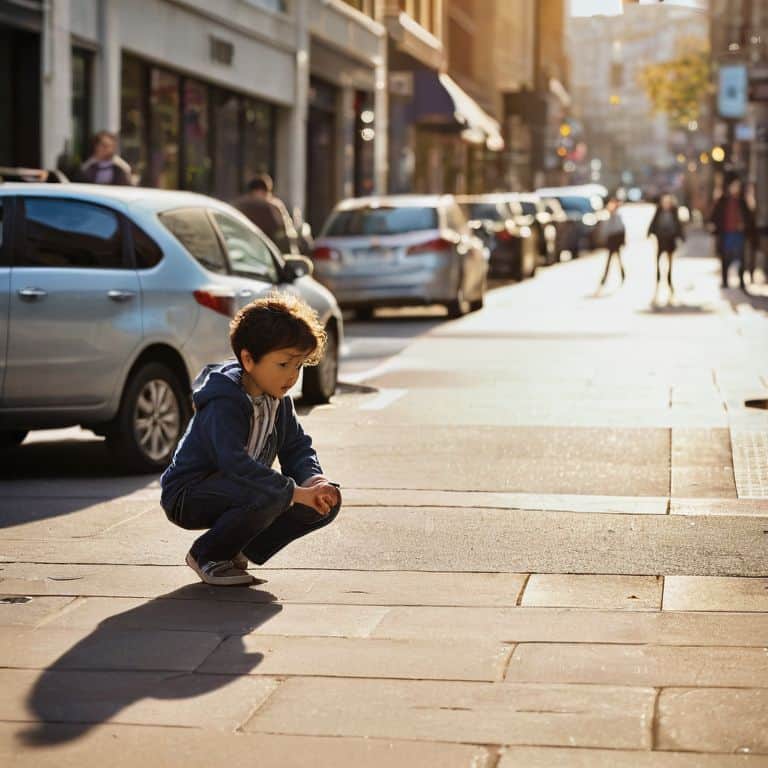
As we conclude this journey through the lens of street photography, let’s recap the essential elements that make a great street photograph: chasing the fleeting story, mastering the quality of light, and capturing candid moments that reveal the essence of urban life. From the golden hour to the humble streets, we’ve explored the techniques and equipment needed to bring these moments to life. By embracing the art of street photography, you’ve taken the first step towards seeing the world with fresh eyes and telling stories that need to be told.
So, as you venture out into the urban landscape with your camera in hand, remember that the best stories are often unposed and that the most powerful photographs are those that capture the essence of the human experience. Don’t be afraid to experiment, take risks, and push the boundaries of what’s possible with your photography. With time, patience, and practice, you’ll develop your unique visual voice and uncover the hidden stories that make a city come alive.
Frequently Asked Questions
How can I anticipate and capture the perfect moment in street photography without being too obvious or intrusive?
For me, it’s all about being present and attuned to the scene. I anticipate moments by reading body language and watching for interactions. I shoot in manual mode, always ready to adjust for the perfect light. It’s a dance between observer and scene, where I’m a silent participant, not a director.
What are some essential camera settings and techniques for shooting in low-light urban environments?
When shooting in low-light urban environments, I swear by manual mode and a wide-aperture lens. I often drop my ISO to 1600 or 3200 and adjust my shutter speed to freeze or blur the action, depending on the story I’m trying to tell. The key is to be intentional with every setting, and to let the available light guide your creative decisions.
How can I develop my own unique style and voice in street photography, rather than just imitating the work of others?
For me, developing a unique style in street photography is all about experimentation and intuition. I ditch the rules and shoot from the heart, letting the city’s rhythm guide my lens. It’s about capturing the in-between moments, the unposed, and the unscripted – that’s where the real magic happens, and your true voice starts to shine through.