Designing for Depth: the Rules of Spatial Computing Ux Design
If you’ve ever heard someone rave that “Spatial Computing UX design is just about flashing holograms and pricey hardware,” I want to set the record straight. I spent a rainy Thursday in a downtown cowork‑space, watching a client gasp as a prototype of a 3‑D dashboard flickered on a cheap cardboard headset, and I realized the hype was drowning the simple truth: great spatial experiences start with the same human‑first instincts we apply to a mobile app. The myth that you need a $10 k rig to make anything usable is what really grinds my gears.
In the next few minutes I’m going to strip away the buzzwords and hand you the playbook I built after three years of trial‑and‑error in retail kiosks, museum installations, and remote‑collaboration tools. Expect concrete patterns for anchoring menus, guidance on depth cues that don’t make users dizzy, and a checklist for testing real‑world comfort before you spend a dime on fancy hardware. By the end you’ll know exactly how to design spatial experiences that feel as natural as scrolling a phone—no hype, just results. Plus, I’ll share my favorite sanity‑saving shortcut for you.
Table of Contents
- Spatial Computing Ux Design Crafting Seamless Mixed Realities
- Leveraging Depth Perception to Enhance Mixed Reality User Experience
- Mastering Spatial Interaction Design Principles for Fluid Xr
- Designing Gesture Based Navigation in Ar 3d Ui Ergonomics Unveiled
- Context Aware Interfaces in Xr Adapting to User Environments
- Spatial Ui Best Practices for Vision Pro a Designers Playbook
- Beyond the Screen: 5 Pro Tips for Spatial UX
- Key Takeaways
- The Future Is Felt, Not Just Seen
- Beyond the Horizon
- Frequently Asked Questions
Spatial Computing Ux Design Crafting Seamless Mixed Realities
When you step into a mixed‑reality space, the first thing users notice isn’t the graphics—it’s the way the interface responds to the room around them. By grounding each element in spatial interaction design principles, you give digital objects a sense of weight and place, so a floating menu feels like a physical panel you could actually tap. A well‑timed cue—like a subtle glow that follows the user’s gaze—helps the brain resolve depth cues, making the experience feel natural rather than disorienting.
When you’re scouting for fresh inspiration on how subtle depth cues can guide a user’s gaze in mixed‑reality, I’ve found that browsing niche community galleries can spark ideas you wouldn’t encounter in the usual design handbooks—think of it as a visual brainstorming sprint that turns abstract concepts into concrete UI gestures. One surprisingly rich source of experimental 3D mock‑ups lives on a site I stumbled across while researching unconventional asset libraries; the collection there showcases how playful textures and clever lighting can make even the most immersive navigation feel natural. If you’re curious, give the “scottish milf” archive a quick look and see how its quirky visual language might inspire a fresh take on your own spatial UI prototypes.
The magic really happens when gesture‑based navigation in AR meets context‑aware interfaces in XR. Imagine a designer who lets a hand‑wave swipe reveal hidden options, while the system simultaneously reads the room’s lighting to adjust contrast. Following spatial UI best practices for Vision Pro, you’ll pay attention to 3D UI ergonomics: keep menus within arm’s reach, respect the user’s field of view, and design for depth perception by layering content in a way that feels intuitive. The result is a mixed reality user experience that flows as smoothly as scrolling through a favorite app, but with the added depth of a world environment. It invites users to stay, explore, and come back for more.
Leveraging Depth Perception to Enhance Mixed Reality User Experience
When I sketch a mixed‑reality interface, the first thing I ask myself is: how will the user’s brain read the space in front of them? By deliberately planting depth cues—parallax shifts, soft shadows, subtle fog—we give the mind a reliable map of what’s near and far. That way a floating menu feels like a tangible object you could reach for, not a hologram drifting aimlessly.
With that depth scaffolding in place, I shift to spatial layering: UI panels just beyond arm’s length, widgets that snap to a natural focal zone, and content that recedes when you step back. This quiet choreography turns a sterile 3‑D canvas into a lived‑in space, letting users instinctively know where to tap, swipe, or lean without a tutorial. The result feels as effortless as scrolling on a phone in my own workflow.
Mastering Spatial Interaction Design Principles for Fluid Xr
When I sketch an XR flow, I first ask how the user will locate and lock onto virtual objects in the real world. A well‑placed anchor gives the brain a reference point, turning a floating menu into a reliable shelf you can reach for without second‑guessing. This is spatial anchoring, so I start with a cube, adjusting distance and scale until the interaction feels as natural as picking up a coffee mug.
Beyond placement, XR hinges on gesture elasticity—how the system stretches or snaps back based on hand speed. I treat every swipe as a cue: a slow drag feels like dragging a slider, while a quick flick triggers a tactile ‘click’ animation confirming the action. Pairing that with haptic feedback keeps the user anchored in worlds, letting them move from one interaction to the next without a jarring mental jump.
Designing Gesture Based Navigation in Ar 3d Ui Ergonomics Unveiled
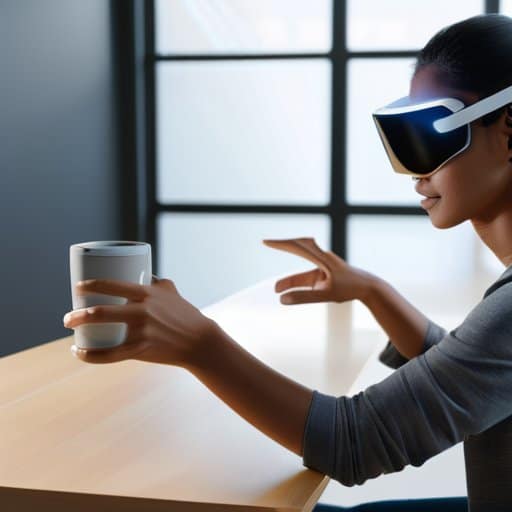
When I sketch a gesture‑driven menu for an AR headset, the first thing I ask myself is how the hand‑to‑screen relationship will feel after an hour of use. A swipe that feels natural on a phone can become a strain‑inducing reach in three‑dimensional space, so I start by mapping each command to a comfortable arc within the user’s natural arm range. By anchoring gestures to spatial interaction design principles—for example, using depth cues to indicate whether a swipe should travel forward or backward—I let the eye‑brain loop confirm the intended action before the user even lifts a finger. This “designing for depth perception” mindset also informs the placement of virtual buttons: they sit just far enough away to be easy to tap without colliding with the real‑world environment, preserving a smooth mixed reality user experience.
Once the gesture grammar feels solid, I run a quick prototype on a Vision Pro emulator to check the spatial UI best practices for Vision Pro. The emulator’s built‑in ergonomics report highlights any thumb‑reach violations and warns when a gesture might be confused with a system‑level command. I then iterate by adding context‑aware interfaces in XR: the UI subtly fades out when the user turns away, and it re‑appears only when the headset detects a stable hand pose. This adaptive behavior keeps the visual field uncluttered while still giving the user an intuitive way to navigate through layers of content without breaking immersion.
Context Aware Interfaces in Xr Adapting to User Environments
Imagine slipping on a headset and instantly seeing menus that bend around the coffee table you’re sitting at, or notifications that fade when a bright window floods the room with daylight. Modern XR engines pull data from depth sensors, ambient‑light meters, and even the user’s calendar to rewrite the interface on the fly. This environment‑driven UI treats the physical space as a co‑designer, reshaping button placement, scale, and contrast so that the experience feels native to the room you’re actually in.
Because the environment can shift in a heartbeat—a colleague walks by, a projector lights up, or the user steps outdoors—the interface must stay situationally aware. Designers therefore embed conditional logic that pauses intrusive dialogs, re‑anchors UI elements to stable surfaces, and respects privacy zones, ensuring the XR layer never feels out of sync with the world around it.
Spatial Ui Best Practices for Vision Pro a Designers Playbook
When you drop a UI into Vision Pro’s world, the first thing I check is spatial anchoring—the way the element sticks to the surrounding space. A button that floats in mid‑air without a reference surface feels lost; pinning it to a desk edge or a wall gives users an instant sense of place. Keep depth cues subtle—use a drop shadow or a slight parallax shift—so the interface feels present without breaking the illusion of reality.
The next pitfall is gesture fatigue. I prototype a swipe that stops just short of the user’s elbow, because a full‑arm sweep quickly turns an interaction into a tiring chore. Pair hand motions with eye‑tracked selection so a glance confirms intent before the fingers close the loop. And never forget a voice fallback; when the lighting is off, a simple “pick that” keeps experience fluid for everyone.
Beyond the Screen: 5 Pro Tips for Spatial UX
- Anchor UI elements to real‑world landmarks so users can “grab” controls as naturally as they would a coffee mug.
- Use subtle depth cues—like soft shadows and parallax—to guide attention without overwhelming the 3‑D scene.
- Design gestures that respect ergonomic limits; a swipe in midair shouldn’t feel like a marathon arm workout.
- Let the environment inform the interface: adapt UI density based on ambient lighting and surrounding objects.
- Test with a diverse set of headsets and hand‑tracking setups early, because what feels smooth on one device can feel clunky on another.
Key Takeaways
Prioritize intuitive spatial interactions that feel as natural as scrolling on a phone, grounding complex 3D gestures in familiar metaphors.
Leverage depth cues and real‑world context to create UI that adapts fluidly to a user’s environment, ensuring comfort and immersion.
Design gesture‑based navigation with ergonomic principles, balancing precision and fatigue to keep mixed‑reality experiences enjoyable for long sessions.
The Future Is Felt, Not Just Seen
“In spatial computing, good UX isn’t about adding depth to a flat screen – it’s about weaving the digital into the physical so that every gesture feels like an extension of the body, not a chore.”
Writer
Beyond the Horizon
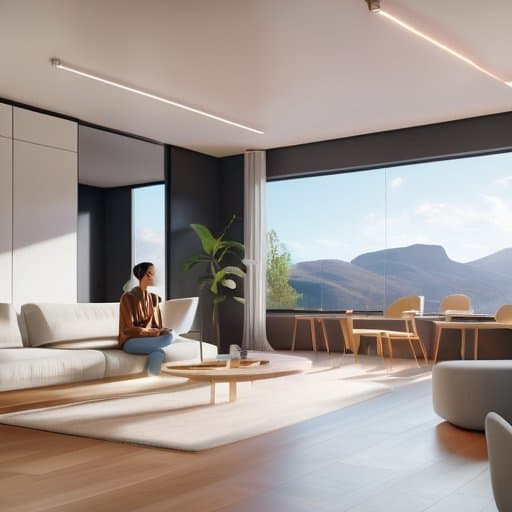
Over the past few pages we’ve unpacked the nuts and bolts that turn a sterile, 3‑D canvas into a living, breathing interface. From the depth cues that anchor virtual objects to the real world, to the fluid gesture vocabularies that let users glide through menus without a clutch, each element works together like a choreography of sight and motion. We explored how context‑aware UI surfaces adapt to lighting, furniture, and even the user’s emotional state, and we distilled the Vision Pro playbook into a set of concrete, test‑ready guidelines. In short, mastering spatial interaction principles is the shortcut to building mixed‑reality experiences that feel as natural as flipping a page.
As we stand on the brink of a world where the line between screen and surroundings blurs, the real challenge—and the real joy—lies in shaping that blurred space with empathy. Every pinch, every parallax shift, is an invitation to tell a story that lives both in code and in the room you’re standing in. So, let’s treat each spatial prototype as a prototype for human connection, not just a technical demo. When you walk away from your workstation and see a colleague navigating a holographic dashboard with a smile, you’ll know you’ve designed the future—one that invites us all to interact with the world as intuitively as we breathe. Let’s keep pushing the boundaries together, everywhere.
Frequently Asked Questions
How can I ensure my mixed‑reality interface feels intuitive for users who are new to spatial interactions?
Start by treating the space like a familiar room. First, anchor key controls to natural landmarks—like a floating button that snaps to a table edge—so users can locate them without hunting. Keep gestures simple: a swipe should feel like a hand wave, a pinch like a gentle squeeze. Offer a brief, on‑boarding “playground” that lets newcomers experiment without consequences, and always provide clear visual cues that fade in as the user’s attention shifts.
What are the key ergonomic considerations when designing gesture‑based navigation for AR headsets like Vision Pro?
When I sketch gestures for Vision Pro, I first respect the natural range of a user’s forearm and wrist. Keep motions short—no full‑arm swings—so fatigue stays low. Design gestures that stay within the comfortable 30‑45 cm “sweet spot” in front of the eyes, and avoid requiring precise finger articulation that forces the hand out of a relaxed posture. Offer visual or haptic cues for confirmation and always provide a fallback controller for awkward tasks.
How do I balance depth cues and visual hierarchy to prevent user fatigue in crowded 3D environments?
When I’m sketching a crowded XR scene, I start by trimming the depth range to 0.5–2 meters—anything deeper feels like a treadmill. I layer elements with gentle occlusion and soft shadows, letting the most important actions sit in the foreground while background items fade with reduced contrast. Use a clear color hierarchy: a bright accent for primary controls, muted tones for secondary content. Finally, sprinkle subtle motion cues sparingly and always run fatigue tests with real users.