A Deep Dive: Where Do Artists Get Their Ideas?
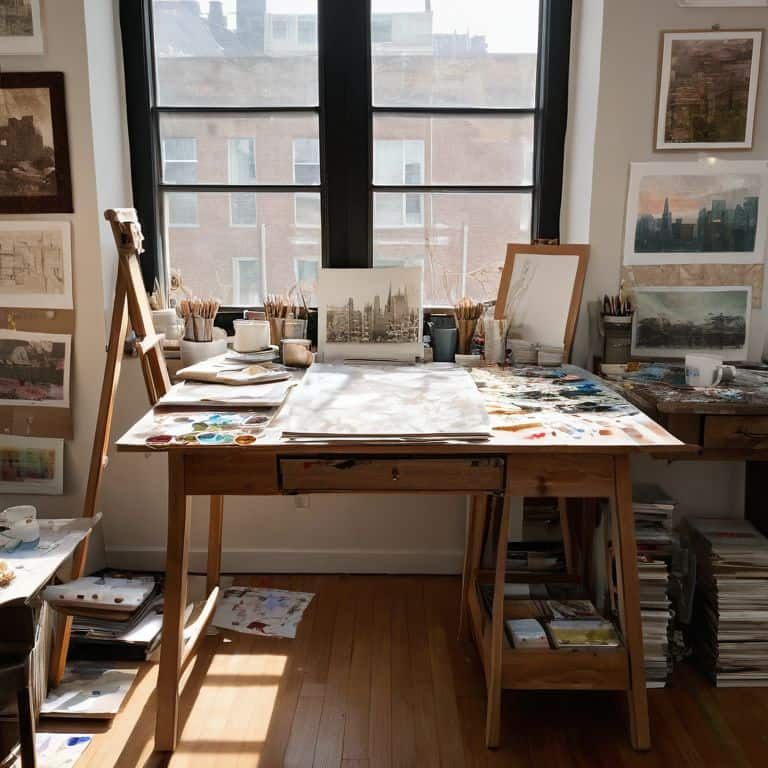
As I sit amidst the quiet chaos of my art studio, surrounded by half-finished canvases and scattered sketches, I often find myself pondering the age-old question: where do artists get their ideas? It’s a query that has sparked countless debates, workshops, and self-help books, each promising to unlock the secret to creativity. But let’s be honest, most of these solutions feel like a shallow attempt to capitalize on our deepest insecurities as artists. They peddle formulas and gimmicks, implying that inspiration can be bought or taught, rather than nurtured through emotional labor and creative struggle.
In this article, I want to offer you a different perspective – one that’s rooted in my own experiences as an art curator and author. I’ll share with you the unvarnished truth about how artists really find their spark, from the happy accidents that lead to breakthroughs, to the fallow seasons that allow our minds to recharge. My goal is to demystify the creative process, to show you that inspiration is not something that can be forced or manufactured, but rather cultivated through patience, curiosity, and a willingness to take risks. By the end of this journey, I hope you’ll come away with a renewed sense of purpose and a deeper understanding of the complex, often messy, process of artistic creation.
Table of Contents
Uncovering Artistic Inspiration
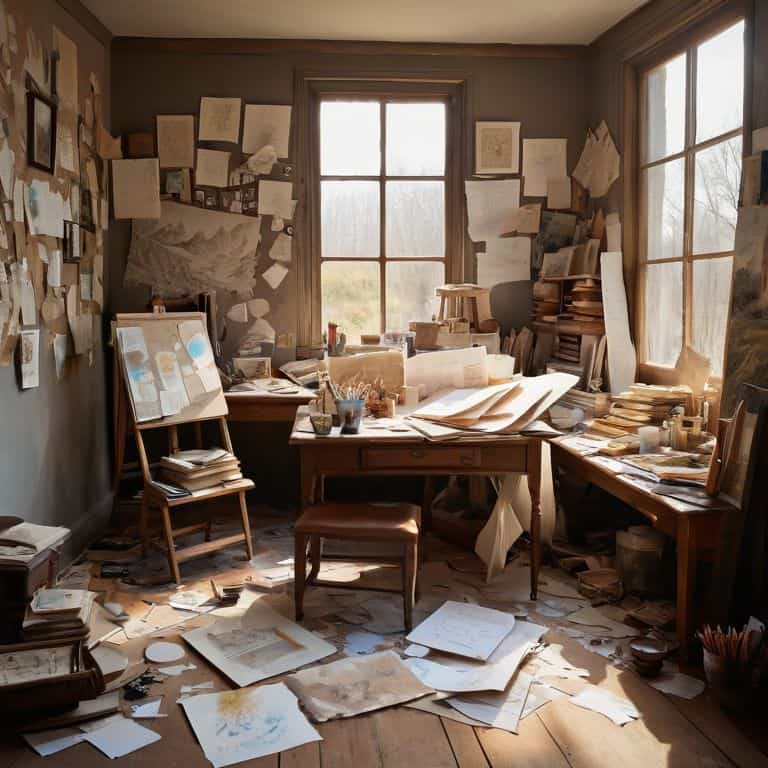
As I reflect on my own experiences visiting artist studios, I’ve come to realize that artist research methods are often unpredictable and meandering. It’s not uncommon for an artist to stumble upon a fascinating topic or theme while exploring unrelated sources. For instance, I recall a conversation with a painter who found inspiration in the works of a 19th-century poet, which led her to experiment with symbolic landscapes in her own work. This kind of cross-pollination of ideas is a powerful catalyst for creative thinking.
In my book on the daily habits of famous artists, I discovered that many of them relied on creative thinking exercises to overcome periods of stagnation. These exercises might involve anything from automatic drawing to writing stream-of-consciousness journals. By embracing these practices, artists can tap into their subconscious mind and uncover new sources of inspiration. I’ve also found that maintaining an art journal can be a valuable tool for tracking one’s thoughts, observations, and insights over time.
As I practice ikebana, the Japanese art of flower arrangement, I’m reminded of the importance of patience and mindfulness in the creative process. By slowing down and allowing ourselves to fully immerse in the present moment, we can begin to understand personal symbolism and tap into our inner sources of inspiration. This, in turn, can help us develop artistic themes that are authentic and meaningful, rather than simply trying to force a particular idea or style.
Creative Thinking Exercises for Spark
As I sit amidst the gentle chaos of an artist’s studio, I’m reminded that creative thinking is a muscle that must be exercised. It’s about embracing the unknown and allowing oneself to wander through the realms of imagination. I recall the words of Paul Klee, who once said, “Art does not reproduce the visible; rather, it makes visible.”
In the stillness of my own ikebana practice, I’ve come to realize the value of mindful observation. By quieting the mind and focusing on the intricate details of nature, I’ve found that inspiration can strike in the most unexpected ways. The delicate dance of petals and stems can evoke a sense of wonder, sparking new ideas and perspectives that might have otherwise gone unnoticed.
Embracing Artist Research Methods
As I sit amidst the quiet chaos of an artist’s studio, I’m reminded that inspiration can be found in the most unexpected places. The scraps of paper, the half-finished canvases, and the fleeting moments of curiosity that spark something new. It’s here, in the midst of creative chaos, that artists uncover their most innovative ideas.
By immersing themselves in the world around them, artists can tap into a deep well of inspiration. Whether it’s through people-watching, nature walks, or pouring over dusty art tomes, the key is to remain open to the possibilities that surround us. In doing so, artists can stumble upon fresh perspectives and novel ways of expressing themselves.
Where Do Artists Get Their Ideas
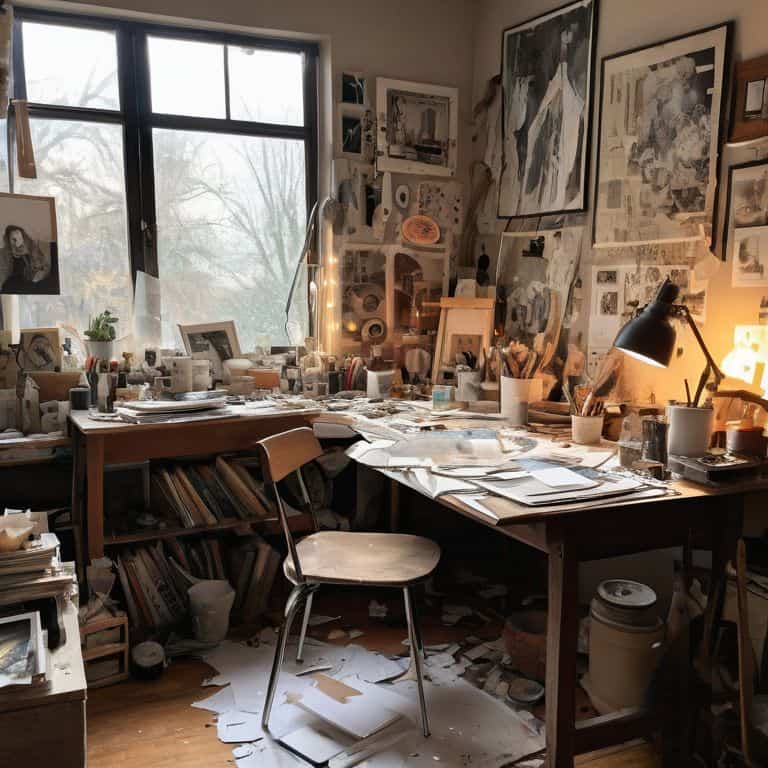
As I wander through the studios of fellow artists, I’m often struck by the diverse array of inspirations that surround them. From torn pages of old books to faded photographs, each item seems to hold a story, a spark that ignited a creative flame. For many, the journey to artistic expression begins with artist research methods, a meandering path of discovery that weaves together disparate threads of influence and experience.
In my own practice, I’ve found that creative thinking exercises can be a powerful catalyst for new ideas. By embracing the unknown and allowing myself to experiment with different mediums, I’ve stumbled upon unexpected sources of inspiration. The tactile sensation of working with clay, the vibrant colors of street art, or the haunting melodies of a forgotten song – each has the potential to unlock a fresh perspective, to guide me through the importance of art journals and into the uncharted territory of my own imagination.
As I reflect on the creative process, I’m reminded that overcoming artist block is often a matter of perspective. By acknowledging the necessity of fallow seasons, we can begin to see the value in periods of quiet contemplation, allowing our minds to recharge and refocus. It’s in these moments of stillness that we may uncover understanding personal symbolism, hidden patterns and themes that underlie our work, waiting to be unearthed and woven into the fabric of our artistic expression.
Overcoming Block With Art Journals
As I reflect on my own journey, I’ve found that creative blocks can be a catalyst for growth, rather than a hindrance. By embracing the uncertainty, I’ve been able to tap into a deeper sense of inspiration. One tool that has been instrumental in this process is the art journal.
I’ve seen many artists use art journals as a way to freely express themselves, without the pressure of creating a masterpiece. This freedom allows them to experiment, take risks, and explore new ideas, often leading to unexpected breakthroughs.
Unlocking Personal Symbolism for Theme Development
As I delve into the world of artistic inspiration, I find myself drawn to the concept of personal symbolism. It’s a fascinating topic, one that reveals the hidden meanings and themes that underlie an artist’s work. By exploring their own personal symbols, artists can tap into a deep well of creative potential, unlocking new ideas and themes that might have otherwise remained hidden.
In my own experience, I’ve seen how emotional resonance can be a powerful catalyst for theme development. When an artist is able to tap into their own emotions and experiences, they can create work that is not only deeply personal, but also universally relatable. This is where the true magic of art happens, where the boundaries between the artist’s inner world and the outer world of the viewer begin to blur.
Spark of Genius: 5 Ways Artists Uncover Their Most Inspired Ideas
- Allowing themselves to get lost in the unknown, whether it’s exploring a new city or delving into an unfamiliar art movement, and finding inspiration in the uncharted
- Practicing the art of observation, whether it’s people-watching, nature walks, or simply paying attention to the tiny details that often go unnoticed
- Engaging in creative conversations with fellow artists, writers, or musicians, and finding common ground to spark new ideas and perspectives
- Experimenting with unconventional materials and mediums, embracing the happy accidents that can arise from pushing boundaries and trying new things
- Keeping an art journal or sketchbook to record fleeting thoughts, observations, and insights, and using it as a catalyst to develop and refine their ideas over time
Key Takeaways for Unlocking Artistic Inspiration
Embracing the messy, beautiful truth of creativity means acknowledging that ideas often arise from unexpected, unstructured moments of curiosity and exploration
By adopting research methods, creative thinking exercises, and tools like art journals, artists can cultivate a mindset that invites inspiration and overcomes creative block
Ultimately, the spark for artistic ideas lies in embracing personal symbolism, exploring themes, and allowing for ‘happy accidents’ to occur, rather than trying to force a predetermined outcome or formulaic approach to creativity
The Spark Within
Artists don’t just find ideas, they uncover the hidden threads that weave their experiences, emotions, and observations into a tapestry of inspiration – it’s a gentle listening to the whispers of their own curiosity, and a brave embracing of the unknown.
Genevieve Croix
Embracing the Mystery of Creative Inspiration
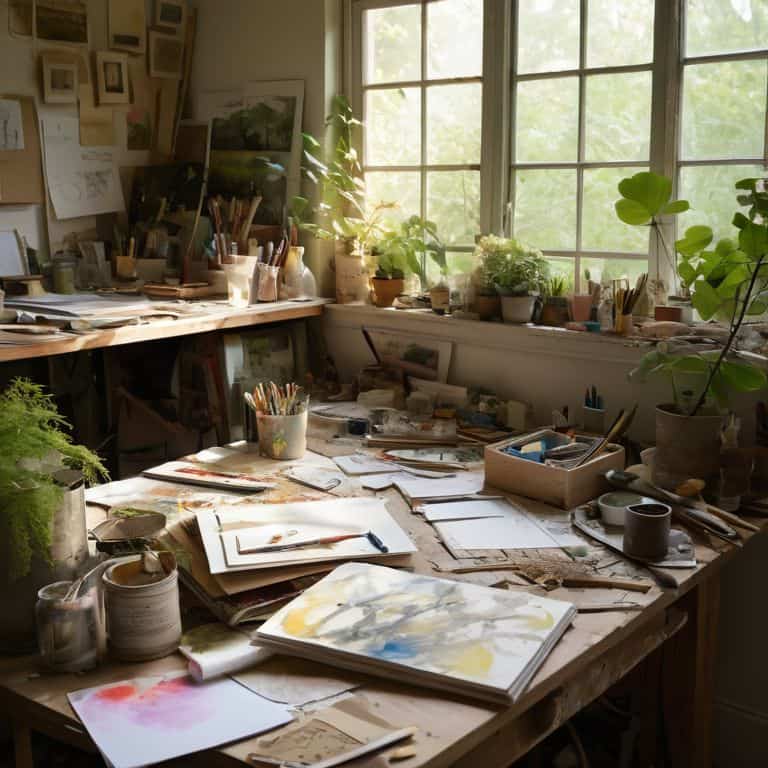
As we’ve explored the question of where do artists get their ideas, we’ve uncovered a rich tapestry of research methods, creative thinking exercises, and personal symbolism. From the messy, beautiful moments of curiosity and exploration to the intentional practices of art journaling and theme development, it’s clear that inspiration is a multifaceted and deeply personal experience. By embracing the unknown and allowing ourselves to wander through the fallow seasons of our minds, we can tap into the hidden sources of our creativity and bring forth innovative, meaningful work.
And so, as we conclude this journey into the heart of artistic inspiration, I offer you a final thought: the spark of creativity is always available to us, waiting to be fanned into a flame by our curiosity, our courage, and our willingness to take risks. May you continue to nurture your creative spirit, embracing the twists and turns of the artistic journey, and may your work be a reflection of the beauty and wonder that you bring to the world.
Frequently Asked Questions
How do artists balance the need for inspiration with the pressure to produce new work?
For me, it’s about embracing the ebb and flow of creativity, allowing oneself to wander and explore without the burden of expectation. As the wonderful artist, Agnes Martin, once said, “The work is the result of an inner process.” By tuning into our inner world, we can find a balance between seeking inspiration and producing new work, letting our unique voice shine through in the process.
Can artists rely solely on personal experiences for inspiration, or do they need to seek out external sources?
While personal experiences can be a rich source of inspiration, I believe artists also need to venture out and explore external sources to stay vital. As the wonderful Georgia O’Keeffe once said, “Whether you succeed or not is irrelevant, there is no such thing as a failure – it’s all part of the journey.” For me, visiting artist studios, collecting old letters, and practicing ikebana have sparked new ideas and perspectives, reminding me that inspiration can be found in the most unexpected places.
What role do mistakes and failures play in the creative process, and how can artists learn from them to spark new ideas?
Mistakes and failures are the fertile soil where creativity takes root. As the Japanese proverb goes, ‘Fall down seven times, stand up eight.’ I’ve seen artists transform their mistakes into breathtaking works, like Bob Ross’s happy little accidents. By embracing the unknown, we can turn failures into stepping stones for innovation, sparking new ideas and perspectives that might have otherwise remained hidden.