Lines of Power: Exploring Myofascial Meridians in Movement
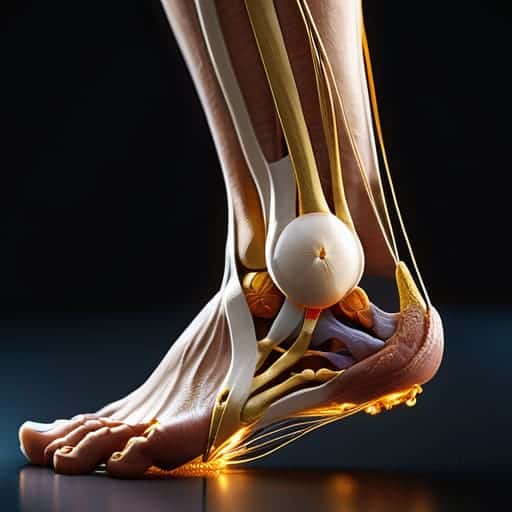
I used to spend hours in physical therapy clinics, watching specialists poke at isolated muscles like they were fixing a broken car engine, one bolt at a time. It felt wrong. They’d treat my tight hip and completely ignore the fact that the tension was actually screaming from my shoulder. That’s because they were ignoring the bigger picture: the Myofascial Meridians (Anatomy Trains) that weave our entire physical existence together. Stop treating your body like a collection of disconnected parts; it’s a single, continuous web, and when you pull one thread, the whole thing shifts.
I’m not here to drown you in academic jargon or sell you a thousand-dollar “alignment” course. Instead, I’m going to give you the unfiltered truth about how these connective tissue lines actually dictate how you move, breathe, and hurt. We are going to strip away the fluff and focus on what actually works to restore balance to your system. By the time we’re done, you’ll stop chasing symptoms and start understanding the architecture of your own body.
Table of Contents
Mastering Fascial Continuity and Kinetic Chains
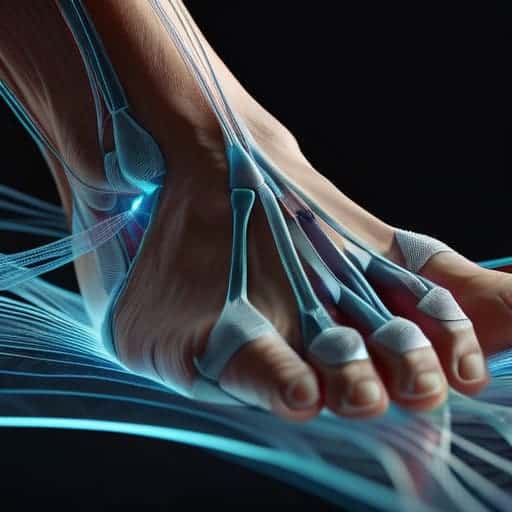
If you’ve ever felt a twinge in your hip only to realize your lower back is the real culprit, you’ve experienced the reality of fascial continuity and kinetic chains in action. We often treat our bodies like a set of LEGO bricks—plugging in a sore knee or a tight shoulder as if they exist in a vacuum. But the truth is much more fluid. When we look at the biomechanics of fascial networks, we see that tension isn’t a local event; it’s a ripple effect. A restriction in the arch of your foot can send a tugging sensation all the way up to your jaw, because the tension travels through these interconnected highways rather than stopping at the muscle border.
Mastering this concept means shifting your focus from “fixing a spot” to optimizing the entire flow. Instead of just smashing a foam roller into a painful knot, we have to understand how anatomical trains for movement efficiency distribute load across the whole system. When you respect these lines, you stop fighting against your own architecture and start moving with it, turning a series of disjointed parts into a single, cohesive engine.
The Biomechanics of Fascial Networks
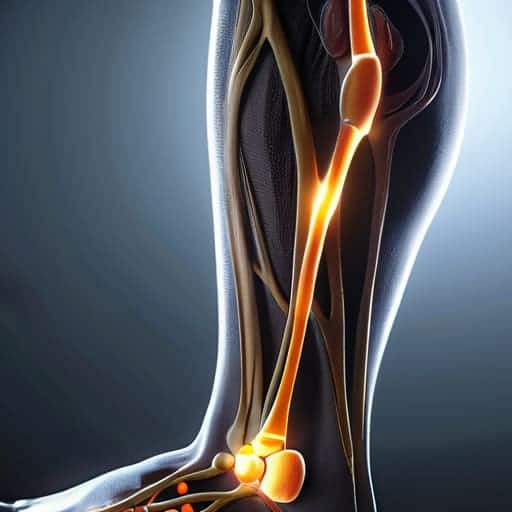
To understand how we actually move, we have to stop looking at muscles as independent pulleys and start seeing them as part of a sophisticated tension system. The biomechanics of fascial networks dictates that force isn’t just generated in a single calf muscle or a bicep; it is distributed across a vast, interconnected web. When you step into a stride, the tension travels through a sequence of tissues, meaning a restriction in your foot can actually sabotage the power output of your hip. This isn’t just theory—it’s how our bodies manage the constant stress of gravity and motion.
This interconnectedness is why we talk so much about anatomical trains for movement efficiency. If one link in the chain is tight or dysfunctional, the entire system has to compensate, often leading to those nagging, “unexplained” aches in places far removed from the actual source of the problem. By viewing the body through the lens of Thomas Myers’ myofascial lines, we see that stability isn’t about rigid strength, but about how effectively these lines can transmit and dissipate energy throughout the entire structure.
Real-World Tactics for Navigating Your Fascial Web
- Stop chasing the pain, not the source. If your hip is screaming, don’t just massage the glute; look up the line. Often, the tension is actually a “tug-of-war” being won by a tight lateral line or a restricted foot arch.
- Prioritize multi-planar movement over static stretching. Fascia thrives on varied, three-dimensional tension. Instead of holding a single pose, try spiraling or rotating through your stretches to engage the different layers of the meridians.
- Hydration isn’t just for your blood; it’s for your glide. Think of your fascia like a sponge—when it’s dry, it’s sticky and prone to adhesions. Consistent hydration ensures those interconnected lines can slide past each other without friction.
- Integrate “micro-movements” into your daily grind. You don’t need an hour of yoga to keep the trains running on time. Small, frequent shifts in posture or gentle spinal rotations throughout the day prevent the fascial networks from “setting” into stagnant patterns.
- Respect the slow burn of fascial remodeling. Unlike muscles, which respond quickly to intensity, fascia is a slow-moving architectural system. Consistency with gentle, sustained tension beats aggressive, short-lived workouts every single time.
The Bottom Line: Moving Beyond Isolated Muscles
Stop treating your body like a collection of separate parts; true movement happens through interconnected lines, where a restriction in your foot can ripple all the way up to your neck.
To achieve lasting mobility, you have to train the “web,” not just the individual muscle, by focusing on the continuous flow of the myofascial networks.
Real physical mastery comes from understanding kinetic chains—once you learn to work with these anatomical highways, you stop fighting your own tension and start moving with efficiency.
The End of Isolated Anatomy
“Stop looking at your body like a machine made of separate gears; start seeing it as a continuous, living tension map where a knot in your foot can rewrite the story of your neck.”
Writer
Moving Beyond the Map

When you start mapping these tension patterns, you’ll realize that movement isn’t just about strength; it’s about how much freedom you actually have within your own skin. If you find yourself struggling to translate these complex biomechanical concepts into your daily routine, I’ve found that looking for localized, practical guides can be a total game-changer for staying grounded. For instance, if you happen to be looking for more specific ways to navigate your surroundings or find local connections like sex in coventry, it’s all about finding those intentional ways to engage with your immediate environment and your body’s natural rhythms.
We’ve spent this time peeling back the layers of the traditional anatomical model to see what’s actually happening under the surface. It isn’t just about individual muscles firing in isolation; it’s about the unseen tension and the fluid communication flowing through your myofascial meridians. By understanding how these Anatomy Trains link your toes to your jaw, you stop treating symptoms in a vacuum and start addressing the true source of dysfunction. Whether it’s a tight calf pulling on your lower back or a restricted ribcage affecting your gait, the lesson is clear: everything is connected through these intricate, living highways.
As you move forward, try to stop viewing your body as a collection of broken parts that need fixing. Instead, start seeing it as a dynamic, integrated web that is constantly communicating with itself. When you respect the continuity of your fascial networks, you stop fighting against your own mechanics and start working with the natural intelligence of your design. Embrace the flow, honor the connections, and remember that true movement isn’t just about strength—it’s about finding harmony within the system.
Frequently Asked Questions
If my fascia is a continuous web, can a restriction in my foot actually be the hidden culprit behind my chronic neck pain?
Absolutely. In fact, that’s exactly how the system works. Think of your fascia like a high-tension spiderweb: if you snag a single thread at the bottom, the vibration travels all the way to the top. A tight plantar fascia or a restricted ankle doesn’t stay local; it pulls on the calves, tugs the hamstrings, and eventually creates a compensatory yank on your cervical spine. Your neck isn’t the problem—it’s just the one screaming the loudest.
How can I practically use the concept of Anatomy Trains to design a more effective stretching or strength routine?
Stop treating your body like a checklist of isolated muscles. If your hamstrings feel tight, stop just pulling on them; look up the chain. Is your lower back compensating for a stiff lateral line? Instead of isolated curls, try integrated movements like lunges with a rotational twist to engage multiple meridians at once. You’re training the web, not just the strands. Aim for tension that travels, rather than just localized fatigue.
Is there a way to tell the difference between a localized muscle knot and a tension issue running along a full myofascial meridian?
Here’s the quick test: a localized knot feels like a stubborn, isolated “BB” under your skin—you can point to it with one finger and it stays put. But a meridian issue? That’s a different beast. It feels like a taut, vibrating wire that travels. If you press a spot in your hip and suddenly feel a zing or a pull all the way down to your ankle, you aren’t dealing with a knot; you’re dealing with a line.