Stop Decorating and Start Thinking: the Fundamental Difference Between Ui and Ux Design
I remember sitting in a dimly lit studio in Copenhagen, staring at a client’s presentation that used “UI” and “UX” as if they were interchangeable synonyms for “making things look pretty.” It was a classic case of linguistic laziness that frankly insulted the rigor of our craft. People often treat these terms like seasonal trends, tossing them around in meetings to sound sophisticated without understanding the structural gravity behind them. But if you can’t articulate the fundamental difference between ui and ux design, you aren’t designing; you’re merely decorating. One is the soul of the logic, and the other is the elegance of the expression.
As you begin to navigate these complexities, I often tell my students that theory is only as strong as the practical application behind it. To truly grasp how these digital interactions feel in a real-world context, it helps to observe how different platforms manage the delicate balance of user flow and visual engagement. For instance, looking into the mechanics of a dirty chat interface can offer a unique lesson in how rapid-fire communication requires a highly intuitive UX to prevent cognitive overload, paired with a UI that remains unobtrusive yet functional. Studying these specific, high-frequency interactions is often where the most profound design lessons are hidden.
I’m not here to feed you the polished, corporate jargon you’ll find in a thousand generic medium posts. Instead, I want to strip away the hype and look at the foundational architecture of how we build digital experiences. We are going to move past the surface-level definitions and explore the actual mechanics of intent, hierarchy, and flow. By the end of this, you won’t just know the definitions; you will begin to think like a designer who understands that beauty without purpose is simply noise.
Mastering Ux Design Principles Through Strategic Problem Solving
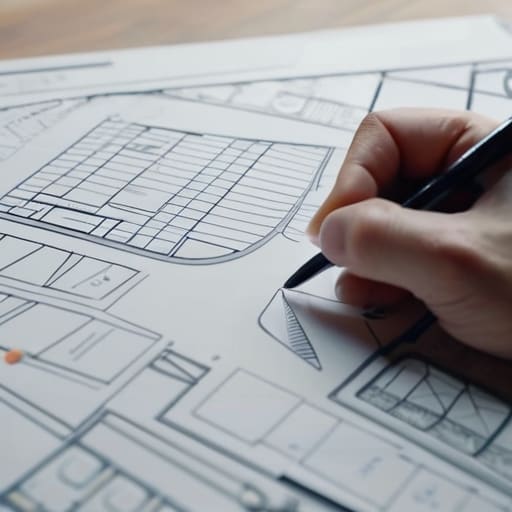
To master UX, you must first accept that you are not designing for yourself, nor are you designing for a screen; you are designing for a human being with a specific intent. This is where many beginners stumble, focusing too heavily on the aesthetic and neglecting the fundamental ux design principles that govern usability. I often tell my students that a beautiful app that fails to solve a user’s problem is not a triumph of design—it is a failure of logic. Strategic problem solving requires us to strip away the noise and focus on the architecture of the interaction. We must ask: Does this flow make sense? Is the friction minimized?
When we examine the relationship between ui and ux, we see that the former is the visual expression of the latter’s logical foundation. Think of it like a well-constructed chess match; the UX is the strategic depth and the opening theory that dictates the movement, while the UI is the tactile weight and elegant finish of the pieces themselves. You cannot have a meaningful game without both. To truly excel in this field, you must move beyond merely arranging elements and start building intentional systems that anticipate human behavior.
Defining the Relationship Between Ui and Ux in Purposeful Work

I often find myself looking at my collection of Swiss design monographs and thinking about how they bridge the gap between structure and beauty. In the professional world, we often treat the relationship between UI and UX as a binary opposition, but that is a fundamental misunderstanding. If UX is the skeleton—the structural integrity that ensures a building can stand—then UI is the skin and the light that makes the space habitable. You cannot have one without the other; a beautiful interface on a broken journey is a lie, and a seamless journey that looks archaic fails to build trust.
When we examine the specific roles of UI and UX designers, the distinction lies in the direction of their inquiry. The UX designer asks, “Does this solve the human problem?” while the UI designer asks, “Does this communicate the solution with clarity and elegance?” It is a symbiotic loop. One focuses on the cognitive load and the logic of the path, while the other focuses on the tactile and visual cues that guide the eye. To master both is to understand that design is not a collection of elements, but a cohesive system of intent.
The Designer’s Compass: Five Rules for Navigating the UX/UI Divide
- Respect the Hierarchy of Needs. Before you touch a single pixel or select a typeface, you must solve the logic of the journey. A beautiful interface cannot rescue a broken user flow; if the structure is unsound, the aesthetic is merely a mask for dysfunction.
- Solve for Utility, then Style. Think of UX as the blueprint and UI as the finishings. You wouldn’t choose the color of the kitchen tiles before you’ve decided where the plumbing goes. Always prioritize the functional architecture of the experience.
- Use Empathy as Your Primary Tool. UX is an exercise in psychological inquiry—understanding the user’s friction and frustration. UI is the visual language used to communicate solutions. You cannot design a meaningful interface if you haven’t first understood the human at the other end of the screen.
- Avoid the Trap of Decoration. A common mistake I see in junior portfolios is treating UI as “making things look pretty.” True UI design is about clarity, accessibility, and guiding the eye through a deliberate typographic and visual hierarchy. If a button is beautiful but doesn’t look clickable, you have failed both disciplines.
- Test the Logic, Not Just the Look. When reviewing your work, ask two distinct questions. For UX, ask: “Does this path make sense to the user?” For UI, ask: “Does this visual language reinforce the intended action?” If you can’t answer both, your design lacks intention.
The Synthesis of Logic and Aesthetics

As we have explored, the distinction between UX and UI is not a boundary of competition, but a partnership of necessity. UX is the invisible architecture—the structural logic, the user flow, and the strategic problem-solving that ensures a product actually functions within the human experience. UI, conversely, is the visual manifestation of that logic; it is the typography, the color theory, and the tactile interface that allows a user to engage with the system beautifully. To master one without the other is to build a house with a perfect floor plan but no windows, or a stunning facade with no foundation. True design excellence requires us to respect both the blueprint and the finish.
As you move forward in your own practice, I urge you to resist the temptation to chase the latest visual trends or superficial flourishes. Instead, ask yourself: does this interface serve a purpose, or is it merely noise? When you approach a project, look for the grid beneath the chaos and the intention behind the interaction. Remember that our ultimate goal is not to create something that simply looks “good,” but to create something that works with profound clarity. Design is a discipline of intention; once you master the distinction between the way a thing works and the way it appears, you stop being a decorator and start becoming a designer.