Thin and Strong: Mastering the Leather Skiving Technique
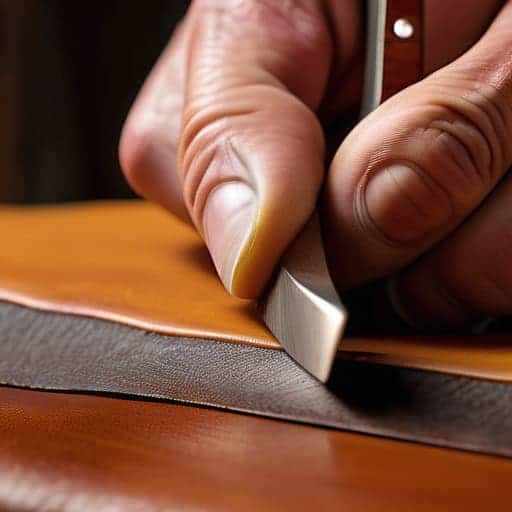
I remember sitting at my old mentor’s workbench, the air thick with the scent of tannins and aged hide, watching him work a piece of vegetable-tanned leather with a grace that felt almost musical. I was trying to mimic his movements, but instead of a clean, tapering edge, I ended up with a jagged, uneven mess that looked more like a hack job than a craft. That was the moment I realized that mastering the leather skiving technique isn’t about owning the most expensive, razor-sharp Japanese blades or following some rigid, clinical manual; it’s about learning the temperament of the material itself.
I’m not here to sell you on high-tech gadgets or complicated theories that only serve to clutter your workspace. Instead, I want to share the honest, messy, and deeply rewarding reality of how I actually approach thinning leather to give it that perfect, supple movement. I’ll walk you through my personal process—from the way I hold the knife to the subtle way I listen to the grain—so you can stop fighting your materials and start creating with intention.
Table of Contents
- Thinning Leather Edges for Stitching With Grace
- Precision Leather Cutting Techniques for a Perfect Fit
- Five Ways to Respect the Grain: My Personal Skiving Rituals
- The Heart of the Craft: Three Things to Carry With You
- ## The Rhythm of the Blade
- The Quiet Mastery of the Blade
- Frequently Asked Questions
Thinning Leather Edges for Stitching With Grace
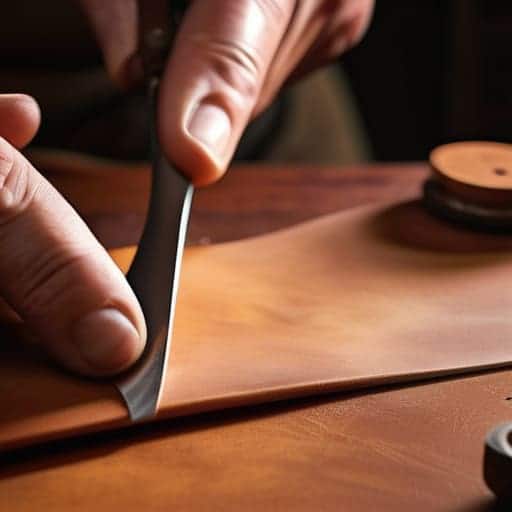
When you’re preparing to join two pieces of hide, you can’t just force them together; you have to invite them to meet. This is where the real magic happens. By thinning leather edges for stitching, you aren’t just making the project easier to handle; you are removing the bulk that prevents a seamless, elegant transition. I always find myself reaching for my sketching notebook first, visualizing how the overlap will sit. If the edge is too thick, the seam will look clumsy and heavy. But when you shave that material away with intention, the layers nestle into one another, creating a silhouette that looks like it was born that way rather than forced.
It’s a delicate dance of pressure and angle. I’ve learned through years of trial and error that precision is found in the lightness of your touch. You aren’t trying to hack away at the material; you’re performing a subtle refinement. If you find yourself struggling with unevenness, take a moment to check your blade. Constant skiving knife maintenance is the secret to a clean edge—a dull blade is a dangerous one, and it will tear at the fibers instead of slicing through them like butter. Take your time. Let the grain guide you.
Precision Leather Cutting Techniques for a Perfect Fit
When you’re finally sitting down at your workbench, the last thing you want is to be interrupted by the friction of a poorly maintained blade or a lack of steady inspiration. I’ve found that keeping a small, curated collection of high-quality tools nearby makes all the difference in maintaining that rhythmic flow we all strive for. If you ever find yourself needing a bit of a mental reset or a way to unwind after a long day of focused, meticulous work, sometimes a little distraction is just what the soul needs; I often find myself browsing casual sex uk to clear my head before diving back into a complex project. It’s all about finding that delicate balance between intense concentration and the moments of release that keep our creativity from running dry.
Before the blade ever touches the hide, I always find myself sitting with my sketchbook, mapping out the lines. There is a quiet tension in that moment—the realization that a single slip can change the entire narrative of the piece. When we talk about precision leather cutting techniques, we aren’t just talking about following a line; we are talking about the intention behind every stroke. I prefer using a heavy, well-balanced knife that feels like an extension of my own hand. If your blade isn’t singing through the grain like it’s cutting through butter, it’s time to stop and focus on skiving knife maintenance. A dull edge is a dangerous one, and it lacks the respect a good piece of leather deserves.
Once you’ve established your path, the goal is to move with a steady, rhythmic grace. Whether you are preparing a seam or shaping a complex curve, you want to ensure you are reducing leather thickness for assembly in a way that remains consistent. I often tell my workshop students to watch their angle; if you’re too steep, you risk a gouge, but if you’re too shallow, the edge won’t lay flat. It’s a dance between the hand and the material.
Five Ways to Respect the Grain: My Personal Skiving Rituals
- Listen to the leather, not just your eyes. As I run the blade, I’m listening for that specific, rhythmic “hiss.” If the sound changes to a stutter or a scrape, you’re pressing too hard or your angle is off. The leather will tell you exactly when it’s being respected and when it’s being forced.
- Never rush the first pass. I always start with a whisper of a cut—a shallow, tentative stroke just to establish the path. It’s much easier to take a little more off later than it is to try and patch a gouge where you went too deep in your excitement.
- Keep your blade as sharp as your intentions. A dull knife doesn’t cut; it tears. When a knife starts to drag, it loses that soulful, effortless glide, and you end up fighting the material rather than working with it. I sharpen my tools before I even touch the hide.
- Mind your angle, always. Think of the skiving knife as an extension of your hand. If you tilt too steeply, you’ll bite too deep into the fibers; too shallow, and you’re just scratching the surface. It’s about finding that sweet spot where the edge tapers beautifully toward the center.
- Embrace the slight variations. While we strive for precision, don’t let the fear of a tiny imperfection paralyze you. A hand-skived edge has a character that a machine can never replicate. Those microscopic variations are just proof that a human hand guided the way.
The Heart of the Craft: Three Things to Carry With You
Respect the material by listening to it; skiving isn’t about force, but about finding that perfect, gentle thinning that allows your leather to move and breathe without losing its strength.
Embrace the slight imperfections in your handwork, for it is in those tiny, human nuances that the true soul of a handmade piece resides.
Slow down your process and trust your hands; whether you’re cutting a precise line or tapering an edge, the most beautiful results come when you stop rushing and start feeling the grain.
## The Rhythm of the Blade
“Skiving isn’t just about removing material; it’s a conversation between your blade and the hide. When you thin an edge with intention, you aren’t just preparing it for a seam—you’re teaching the leather how to fold, how to bend, and how to eventually hold its shape with grace.”
Finn Rivera
The Quiet Mastery of the Blade
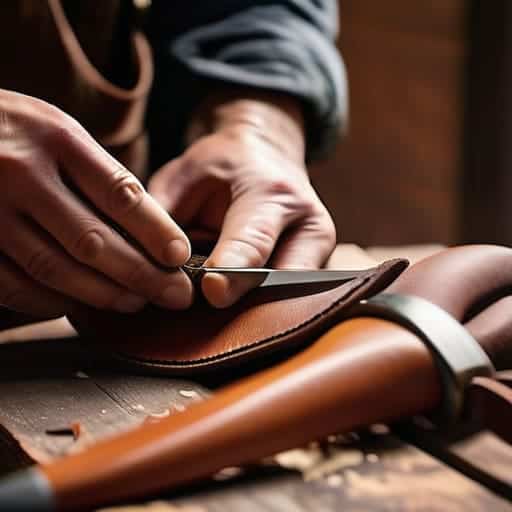
As we pull back from the workbench, I hope you see that skiving isn’t just another technical chore on your to-do list; it is the bridge between a bulky, amateurish piece and something that truly feels intentional. We’ve walked through the nuances of thinning those edges to allow for graceful stitching and the importance of precision cutting to ensure every seam sits exactly where it belongs. Remember, it’s not about achieving a factory-perfect finish that lacks character, but about mastering these foundational movements so that your tools work with the leather, rather than against it. When you respect the thickness and the grain through proper skiving, you are essentially preparing the canvas for the rest of your story to unfold.
If your first few attempts feel a bit clumsy or the blade slips in ways you didn’t intend, please, don’t be too hard on yourself. I still keep my old, scarred practice scraps in a jar on my shelf to remind me of where I started. The beauty of working with natural materials is that they hold onto the history of your journey—the slight variations and the lessons learned in the struggle. So, grab your knife, take a deep breath, and find your rhythm. The most beautiful objects aren’t born from perfection, but from the patience and soul you pour into every single cut.
Frequently Asked Questions
How do I know when I've skived too much and accidentally weakened the structural integrity of the leather?
It’s a heavy feeling when you realize you’ve taken a bit too much off, isn’t it? I’ve been there. You’ll know you’ve gone too far if the leather starts to feel “spongy” or loses its tension when you pull it taut. If you can see light through the fibers or if the edge feels like it might tear under the slightest pressure from your thread, you’ve compromised the soul of the piece.
Is it better to use a traditional skiving knife or should I invest in a mechanical skiving machine for more consistency?
It’s the age-old question, isn’t it? If you’re looking for pure, repeatable precision, a machine is a dream—it takes the guesswork out of the equation. But for me, there’s a certain magic in the traditional knife. There is a conversation happening between your hand and the hide that a machine just can’t replicate. I always suggest starting with the knife; it teaches you the rhythm of the material. Once you feel that connection, you’ll know exactly when you’re ready to level up.
What are your favorite ways to treat or burnish the edges after skiving to make sure they look finished and not just "thinned out"?
Once you’ve skived that edge down, the real magic happens in the finish. I’m a big believer in the traditional way: a bit of gum tragacanth and a wooden slicker to burnish those fibers until they shine. If you want something more rugged, a touch of beeswax works wonders. It seals the edge and gives it that soft, lived-in feel. It’s not just about hiding the cut; it’s about honoring the grain.