A Guide on How to Set Creative Goals and Stay on Track

As I sit amidst the gentle chaos of my art studio, surrounded by half-finished canvases and scattered paint tubes, I’m reminded of the oft-repeated myth that setting creative goals is a straightforward, formulaic process. But I’m here to tell you that it’s not always easy, and that’s what makes it so beautifully messy. I’ve spent years studying the habits of famous artists, and I’ve come to realize that the most innovative minds are often those that have learned to embrace the unknown, to find inspiration in the happy accidents that occur when we least expect them. So, if you’re looking for a guide on how to set creative goals, you’re in the right place.
In this article, I promise to share with you the honest, no-hype advice I’ve gathered from my own experiences as an art curator and author. I’ll walk you through the process of discovering your true creative aspirations, and provide you with practical tips on how to turn those aspirations into tangible goals. You’ll learn how to silence your inner critic, and how to cultivate a mindset that allows you to embrace the uncertainty of the creative process. By the end of this journey, you’ll be equipped with the tools and confidence to set creative goals that feel like a warm hug for your soul, and to embark on a path of artistic expression that is truly yours.
Table of Contents
Guide Overview: What You'll Need

Total Time: 1 hour 15 minutes
Estimated Cost: $0 – $10
Difficulty Level: Easy
Tools Required
- Journal or Notebook (dedicated to goal setting)
- Pen or Pencil (for writing and brainstorming)
- Computer or Tablet (optional, for research and organization)
Supplies & Materials
- Stickers or Colored Pens (for creative expression and highlighting)
- Goal Setting Templates (printable or digital, for guidance and structure)
- Vision Board Materials (optional, for visualizing and manifesting goals)
Step-by-Step Instructions
- 1. First, let’s start by giving yourself permission to dream big, to envision the kind of creative projects that truly excite and inspire you. Take some time to reflect on what you want to achieve, what kind of art you want to make, and what kind of impact you want to have. Don’t worry about practicality just yet, just let your imagination run wild and see where it takes you.
- 2. Next, grab a notebook and start writing down your ideas, no matter how silly or unrealistic they may seem. This is a brain dump, a chance to get everything out of your head and onto paper. Don’t worry about editing or censoring yourself, just let the ideas flow. As you write, ask yourself questions like “what if?” and “why not?” to help stimulate your creativity and think outside the box.
- 3. Now, take a step back and look at your list of ideas. Start to group similar ideas together, looking for themes and patterns that can help you identify your core creative goals. You may find that certain ideas are related, or that they share common threads and motivations. This can help you to start building a framework for your creative goals, and to identify the areas where you want to focus your energy.
- 4. As you start to clarify your creative goals, it’s essential to make them specific and measurable. Instead of saying “I want to be a better artist,” say “I want to spend 30 minutes each day practicing my drawing skills” or “I want to create a new piece of art every week for the next 3 months.” This will help you to stay focused and motivated, and to track your progress over time.
- 5. Next, think about the obstacles that might stand in your way, the challenges and setbacks that could derail your creative goals. Be honest with yourself, and acknowledge the things that might hold you back. Then, start to brainstorm ways to overcome these obstacles, whether it’s finding a supportive community, setting up a regular creative routine, or seeking out new skills and knowledge.
- 6. Now, it’s time to create a schedule and a timeline for your creative goals. This will help you to stay on track, and to make sure that you’re making progress towards your goals. Be realistic about how much time you have available, and don’t be afraid to adjust your schedule as needed. Remember, the goal is to make progress, not to be perfect.
- 7. Finally, remember that creative goals are not set in stone, and that it’s okay to be flexible and adapt as you go. Your goals may change over time, and that’s perfectly okay. The most important thing is to stay true to your creative vision, and to keep moving forward, even when the going gets tough. As the great artist Bob Ross once said, “we don’t make mistakes, just happy little accidents.
Embracing Messy Goals
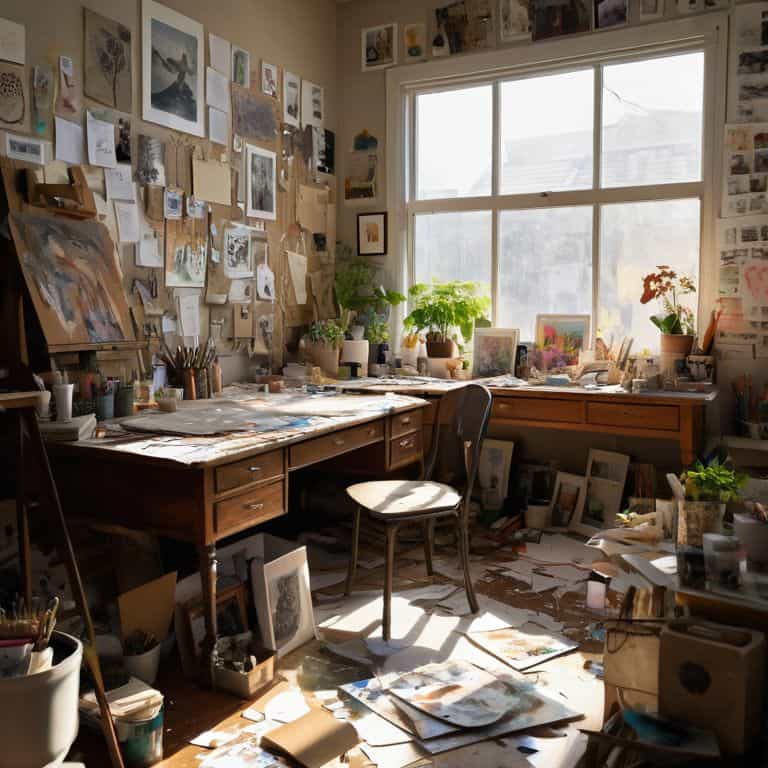
As I sit amidst the gentle chaos of my own studio, surrounded by half-finished projects and scraps of paper filled with creative vision board ideas, I’m reminded that the most beautiful works often emerge from a place of imperfection. Embracing the unknown is a crucial part of the creative journey, and it’s essential to allow ourselves the freedom to explore and experiment without fear of failure. By doing so, we can tap into our deepest sources of inspiration and cultivate a sense of flow state in art that guides us toward our most authentic expressions.
In my experience, overcoming self doubt as an artist is a significant hurdle to clear, but one that can be overcome by acknowledging and accepting our doubts, rather than trying to suppress or deny them. By acknowledging these feelings, we can begin to develop a more compassionate and gentle approach to our creative pursuits, one that prioritizes nurturing our artistic souls over striving for perfection. This, in turn, can help us stay focused on our setting artistic intentions and maintain a sense of purpose and direction, even when the path ahead seems uncertain.
As we navigate the twists and turns of our creative journeys, it’s essential to remember that time management for creatives is not just about allocating hours or minutes, but about cultivating a sense of harmony and balance that allows us to stay attuned to our inner rhythms and creative impulses. By embracing this mindset, we can begin to see our creative goals not as rigid destinations, but as organic, evolving processes that unfold with patience, dedication, and a willingness to surrender to the unknown.
Creative Vision Board Ideas
As I sit amidst the gentle chaos of my own creative space, surrounded by half-finished projects and scraps of inspiration, I’m reminded of the beauty of vision boards. These tactile collages of dreams and desires can be a powerful tool for clarifying our creative intentions. For me, the process of gathering images, words, and textures that resonate with my artistic vision is a meditative ritual, a way of tuning into the whispers of my own imagination.
I’ve seen vision boards that are meticulously arranged, with each element carefully considered, and others that are more free-form, with pieces layered haphazardly, like the happy accidents that often occur in the creative process. Either way, the act of crafting a vision board can be a potent catalyst for bringing our creative goals into focus, and I encourage you to experiment with this practice, embracing the messy, iterative process as a necessary step towards clarity and inspiration.
Overcoming Self Doubt Daily
As I sit amidst my collection of old letters from artists, I’m reminded that even the most renowned creatives have grappled with self-doubt. It’s a feeling that can creep in like a whisper, questioning our every brushstroke, word, or note. Yet, it’s in these moments that we must gently coax ourselves back to the canvas, the page, or the instrument. I recall the words of Georgia O’Keeffe, “Whether you succeed or not is irrelevant, there is no such thing as a failure in art.”
In the stillness of my ikebana practice, I’ve come to realize that self-doubt is not a barrier, but a sign that we’re venturing into uncharted territory. By acknowledging and accepting these doubts, we can begin to quiet the critic within and tap into our inner source of inspiration. As we navigate the twists and turns of our creative journey, may we learn to treat ourselves with kindness, compassion, and understanding, just as we would a dear friend.
Nurturing Your Creative Soul: 5 Tips to Set Goals That Inspire
- Allow yourself to dream big, but start small – as the wise words of Michelangelo remind us, ‘The greater danger for most of us lies not in setting our aim too high and falling short, but in setting our aim too low, and achieving our mark’
- Listen to the whispers of your heart, and let your intuition guide you in setting goals that feel authentic and meaningful, just as the gentle curves of a well-crafted ikebana arrangement can evoke a sense of serenity and balance
- Embrace the beauty of imperfection, and give yourself permission to make mistakes – as the renowned artist, Bob Ross, once said, ‘We don’t make mistakes, just happy little accidents’
- Create a sacred space for your creativity to flourish, whether it’s a cozy studio, a peaceful garden, or a quiet corner in your home, where you can nurture your ideas and let them grow
- Practice self-compassion, and be gentle with yourself as you navigate the twists and turns of your creative journey – remember, my friend, that creative block is not a failure, but a necessary fallow season for the mind, where new ideas can germinate and bloom
Three Essential Reminders for Setting Creative Goals
Allow yourself to embrace the messiness of the creative process, and remember that ‘happy accidents’ can often lead to innovative breakthroughs
Your goals should be a reflection of your unique voice and vision, rather than a attempt to conform to external expectations or pressures
By acknowledging and working through self-doubt, you can cultivate a deeper understanding of your own creative needs and desires, and set goals that truly nourish your artistic spirit
Setting Goals with Soul
The most beautiful creative goals are not those that are meticulously planned, but those that are tenderly nurtured, allowing room for the happy accidents and unexpected detours that ultimately lead us to our most authentic work.
Genevieve Croix
Embracing the Journey: A Creative Path Forward
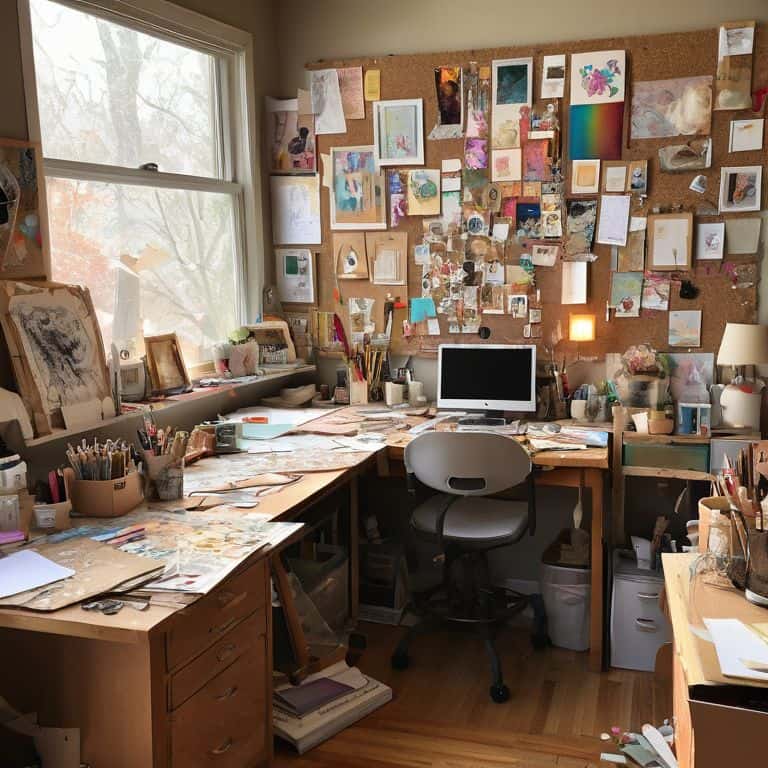
As we’ve explored the process of setting creative goals, it’s essential to remember that embracing the unknown is a crucial part of the journey. We’ve discussed the importance of messy goals, and how they can lead to unexpected breakthroughs. We’ve also delved into the world of creative vision boards, and touched on the daily struggles of overcoming self-doubt. Through it all, I hope you’ve come to realize that setting creative goals is not a one-time event, but a continuous process of discovery and growth.
As you move forward on your creative path, I want to leave you with a final thought: your unique voice matters. Don’t be afraid to take risks, to make mistakes, and to learn from them. Remember that the greatest artists, writers, and innovators have all been through their own struggles with self-doubt and uncertainty. And yet, they persisted, and their work continues to inspire us to this day. So, go forth, dear creator, and make your mark on the world – not despite the challenges, but because of them.
Frequently Asked Questions
How do I know if my creative goals are realistic and achievable?
To gauge if your creative goals are realistic, take a step back and ask yourself: ‘What’s the smallest, most manageable version of this dream?’ Break it down, and you’ll find the sweet spot where ambition meets achievability. As the artist Chuck Close once said, “The most important thing is to begin.
What if I'm unsure about my creative vision or don't know what I want to achieve?
Don’t worry, dear one, uncertainty is a natural part of the creative journey. Allow yourself to explore, to wander, and to discover. Your vision will unfold with time. As the Japanese proverb says, “Fall down seven times, stand up eight.” Give yourself permission to not know, and simply begin.
How can I balance the desire for creative freedom with the need for structure and deadlines in my goal-setting process?
As I ponder the delicate dance between creative freedom and structure, I’m reminded of the wise words of Georgia O’Keeffe: “Whether you succeed or not is irrelevant, there is no such thing as making a mistake.” Perhaps, then, the key to balance lies not in rigid planning, but in embracing a gentle, guiding framework that allows for happy accidents and spontaneous expression.