A Guide on How to Create a Photo Essay That Tells a Story

I still remember the first time I tried to create a photo essay. I was so caught up in the technical aspects of photography that I forgot the most important part: telling a story. I had all the right equipment, but my images lacked _soul_. It wasn’t until I let go of my need for perfection and started focusing on the _fleeting moments_ that I was able to capture something truly special. As I developed my film in my darkroom, I realized that how to create a photo essay wasn’t just about following a set of rules, but about learning to see the world in a different way.
In this article, I want to share with you my favorite tips for crafting a photo essay that tells a story. I’ll take you through my process, from planning and execution to editing and refinement. You’ll learn how to use _natural light_ to your advantage, how to _compose images_ that draw the viewer in, and how to _edit your photos_ to create a cohesive narrative. My goal is to help you find your own unique voice and vision, so you can create a photo essay that truly speaks to others. By the end of this guide, you’ll have the tools and confidence to start telling your own stories through photography.
Table of Contents
Guide Overview: What You'll Need
Total Time: 2 hours 30 minutes
Estimated Cost: $20 – $100
Difficulty Level: Intermediate
Tools Required
- Computer (with photo editing software)
- Camera (with charger and memory cards)
- Notebook (for brainstorming and planning)
Supplies & Materials
- Photographs (printed or digital)
- Photo Editing Software (e.g., Adobe Lightroom, Photoshop)
- Journal or Diary (for writing captions and stories)
Step-by-Step Instructions
- 1. First, let’s start by defining what a photo essay is – a series of images that tell a story. To create one, you need to have a clear idea of what story you want to tell. This could be a personal narrative, a documentary series, or even a conceptual project. Take some time to brainstorm and reflect on what theme or subject you want to explore.
- 2. Next, you’ll need to plan your approach. This involves researching your subject, understanding the context, and identifying the key elements that will help you tell your story. I like to create a mood board to visualize my ideas and get a sense of the tone and atmosphere I want to convey. This could be a physical board or a digital collection of images and notes.
- 3. Now it’s time to think about the visual flow of your essay. Consider how you want to pace your story, what images will go together, and how you’ll use composition and lighting to create a cohesive narrative. I always shoot in manual mode to have full control over my camera settings, which allows me to capture the exact mood and atmosphere I’m looking for.
- 4. With your plan in place, it’s time to start shooting. Remember, the goal of a photo essay is to tell a compelling story, so don’t be afraid to experiment and try new things. I’m a big believer in the power of golden hour light, so I often plan my shoots around this time to capture warm, soft tones that add depth and emotion to my images.
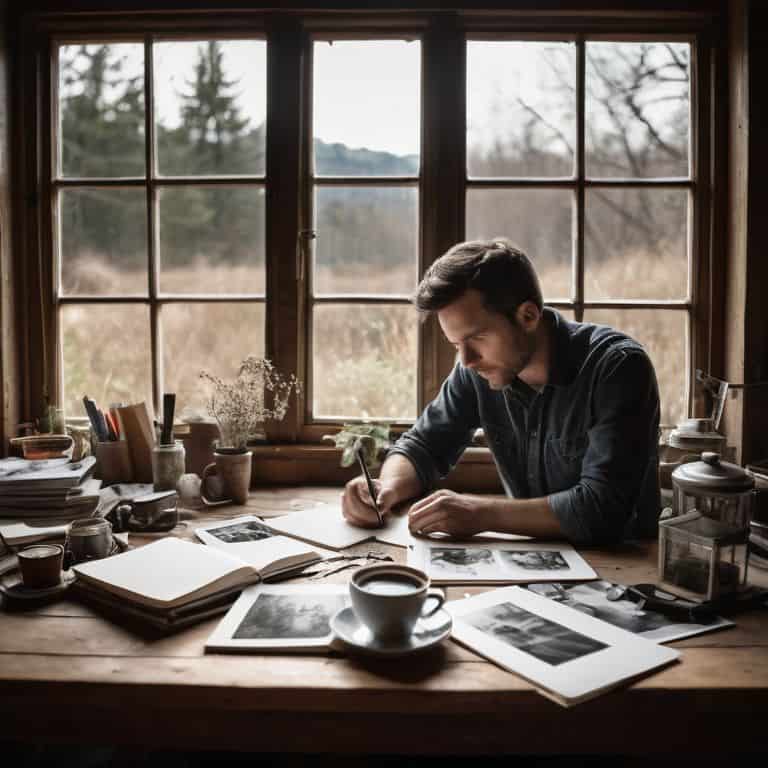
- 5. As you start to accumulate images, it’s essential to edit and curate your work. This involves selecting the images that best tell your story and arranging them in a way that flows logically. I like to print out small versions of my images and lay them out on a table or board to get a sense of the overall narrative and make any necessary adjustments.
- 6. Once you have your final selection of images, it’s time to think about the technical aspects of presenting your photo essay. This could involve resizing and optimizing your images for web or print, or designing a layout that complements your story. I’m a fan of simple, minimalist designs that let the images speak for themselves.
- 7. Finally, it’s time to share your work with others. This could involve creating a website or social media portfolio, submitting your essay to publications or competitions, or even exhibiting your work in a gallery. Remember, the goal of a photo essay is to connect with your audience and tell a story that resonates with them, so don’t be afraid to put yourself out there and see how people respond.
Crafting Your Vision
As I reflect on my own journey in visual storytelling techniques, I’ve come to realize that crafting a cohesive narrative is key to a compelling photo essay. This involves carefully selecting thematic images that not only resonate with your message but also complement each other in terms of composition and light. I often find myself drawn to narrative photography tips that emphasize the importance of capturing emotional moments, as these are the ones that tend to leave a lasting impression on the viewer.
When it comes to editing photos for cohesion, I believe that less is often more. By stripping away distractions and focusing on the essential elements of each image, you can create a sense of flow that guides the viewer through your story. This is where your photo essay structure examples come into play, as you need to consider how each image relates to the ones that come before and after it. I like to think of it as a dance of light and shadow, where each step builds upon the last to create a harmonious whole.
In my experience, the most powerful photo essays are those that capture emotional moments in a way that feels authentic and unposed. This requires a deep understanding of your subject and a willingness to get close without being intrusive. By doing so, you can create images that not only tell a story but also evoke a sense of emotional connection in the viewer. As you continue to refine your craft, remember that the goal is to tell a story that resonates, not just to showcase your technical skills.
Uncovering Fleeting Stories
As I wander through the city, camera in hand, I’m constantly on the lookout for those fleeting stories that reveal the essence of a place and its people. It’s the way the golden hour light dances across a stranger’s face, or the way a child’s laughter echoes through a quiet alley. These are the moments that make an image truly unforgettable. For me, uncovering these stories is about being present and attentive, letting the world unfold before my lens.
I recall a particular shot I took in a bustling market, where a vendor’s hands moved deftly, weaving a tale of tradition and craftsmanship. It was a split-second moment, but one that spoke volumes about the human experience. By slowing down and truly seeing the world around us, we can begin to uncover these fleeting stories and craft photo essays that resonate deeply with others.
Visual Storytelling Techniques
As I reflect on my own journey in photography, I’ve come to realize that visual storytelling techniques are the backbone of a compelling photo essay. It’s about using light, composition, and emotion to convey a message that resonates with the viewer. I always tell my students to pay attention to the way the light falls on their subject – is it harsh and dramatic, or soft and intimate? This subtle nuance can completely shift the tone of the image.
For me, it’s all about capturing the unposed moments, when my subjects are lost in thought or fully immersed in their surroundings. These are the moments that reveal the most about their character and story. By using a combination of wide shots, close-ups, and mediums, I aim to create a narrative that flows like a poem, with each image building on the last to convey a deeper sense of understanding and connection.
Bringing Your Vision to Life: 5 Essential Tips for Crafting a Compelling Photo Essay
- Start by identifying the core theme or narrative thread that ties your photos together, and use this as a foundation to build your essay
- Experiment with different visual storytelling techniques, such as juxtaposition, symbolism, and sequencing, to add depth and complexity to your images
- Pay attention to the quality of light in your photos, and strive to capture a range of lighting conditions to create visual interest and mood
- Don’t be afraid to get up close and personal with your subjects – intimate, unposed portraits can be incredibly powerful in a photo essay
- Finally, remember to leave room for experimentation and improvisation – some of the most memorable photos often come from taking risks and trying new things
Key Takeaways for Crafting a Memorable Photo Essay
Developing a keen eye for storytelling is crucial, and this involves understanding how to use light, composition, and emotion to convey a message
Mastering the art of visual storytelling techniques, such as using unposed portraits and capturing the essence of ‘golden hour’, can elevate your photo essay from a series of images to a cohesive narrative
Embracing your unique visual style and perspective is vital, as it allows your photo essay to stand out and resonate with viewers on a deeper level, making the story truly unforgettable
The Heart of a Photo Essay
A photo essay is not just a collection of images, but a symphony of moments that whisper secrets, evoke emotions, and leave the viewer with a haunting sense of wonder – it’s a journey of discovery, not just of the world around us, but of the depths within ourselves.
Julian Kade
Bringing Your Vision to Life

As we’ve journeyed through the process of creating a photo essay, we’ve touched on the importance of crafting your vision, from uncovering fleeting stories to mastering visual storytelling techniques. We’ve also explored the nitty-gritty details of planning, execution, and editing, all of which are crucial in bringing your unique perspective to life. By embracing the art of observation and staying true to your creative voice, you’ll be well on your way to producing photo essays that not only tell compelling stories but also resonate deeply with your audience.
As you continue to hone your craft, remember that the true power of a photo essay lies in its ability to evoke emotions and spark meaningful connections. So, don’t be afraid to experiment, take risks, and push the boundaries of what’s possible. With dedication, passion, and a willingness to see the world from new and unexpected angles, you’ll unlock the full potential of this incredible medium and create photo essays that leave a lasting impact on all who experience them.
Frequently Asked Questions
How do I decide on a theme or concept for my photo essay?
For me, themes emerge from personal experiences and observations. I ask myself, what’s been on my mind lately? What stories do I want to tell? Consider your passions, interests, and concerns – these can be great catalysts for a photo essay concept.
What are some tips for capturing high-quality images in different lighting conditions?
For me, it’s all about embracing the unique qualities of available light. I love shooting during golden hour, when the soft, warm tones bring depth to my images. But I also enjoy the challenge of working with harsh midday sun or moody overcast skies – each condition offers a distinct opportunity to tell a story.
How can I effectively sequence and edit my photos to tell a cohesive story in my photo essay?
When sequencing and editing, I look for a narrative flow that weaves my images together. I consider the pacing, tone, and emotional resonance of each photo, asking myself how they interact to tell a story. In my darkroom, I’ll often lay out prints, rearranging them until the sequence feels intuitive, like a visual conversation that unfolds naturally.