Beyond the Settings: Mastering the Art of Light Through Understanding the Exposure Triangle Explained
I remember standing in a dimly lit alleyway in Havana, the scent of salt air and old diesel thick in the humidity, feeling completely paralyzed by my own gear. I had this beautiful, candid moment unfolding in front of me—an old man leaning against a sun-bleached doorway—but instead of capturing the soul of the scene, I was staring blankly at my LCD screen, cursing the technical jargon of my manual. Most textbooks treat understanding the exposure triangle explained like a dry, intimidating math equation that you have to memorize just to survive a shoot. They turn something that should be intuitive into a barrier between you and the story you’re trying to tell, and honestly, that’s where most photographers lose their spark.
I’m not here to throw formulas at you or treat you like a student in a lecture hall. My promise to you is much simpler: I want to help you stop calculating and start seeing. We’re going to strip away the academic fluff and look at aperture, shutter speed, and ISO through the lens of light and emotion. By the time we’re done, you won’t just be balancing numbers; you’ll be dancing with the light to capture the world exactly as you feel it.
Aperture vs Shutter Speed vs Iso Finding Your Vision
When I first transitioned from a corporate cubicle to a life behind the lens, I used to treat my camera like a calculator. I thought if I just crunched the numbers, the perfect shot would appear. But here’s the truth: the real magic happens when you stop calculating and start feeling. When you’re navigating aperture vs shutter speed vs ISO, you aren’t just managing light; you are choosing the mood of your story. Do you want to isolate a subject in a soft, creamy blur to highlight their emotion, or do you want to freeze a split second of a street performer’s movement?
That’s where the tension lies. Mastering the manual mode photography basics is really about understanding trade-offs. If you open your aperture wide to get that beautiful shallow depth of field, you might need a faster shutter speed to avoid motion blur, which in turn might force you to bump up your ISO. Suddenly, you’re balancing the risk of digital noise against the desire for a specific look. It’s a delicate dance, but once you learn how to balance exposure settings intuitively, you stop fighting your gear and start actually seeing the light.
Photography Exposure Fundamentals Learning to See the Light
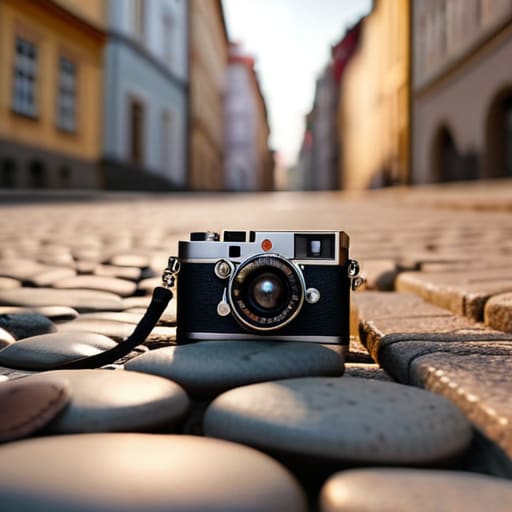
When I first stepped away from my corporate desk and picked up a Leica, I spent far too much time staring at my LCD screen, obsessing over histograms. I was so focused on the math that I missed the way the sun was hitting the cobblestones in Prague. That’s the trap. To truly grasp photography exposure fundamentals, you have to stop looking at your camera as a computer and start seeing it as an extension of your eyes. It’s about recognizing how the environment is offering you light, and then deciding how you want to translate that light into a feeling.
Once you move past the technical intimidation, you’ll realize that mastering how to balance exposure settings is actually an act of curation. If you’re shooting a street scene at dusk, you might choose a slower shutter speed to catch the flow of the crowd, accepting a bit of motion blur to convey the city’s energy. Or, you might prioritize a wide aperture to melt a distracting background into a creamy wash, letting your subject breathe. It’s not about “correct” settings; it’s about making intentional choices that align with the story you’re trying to tell.
Five Ways to Stop Calculating and Start Seeing
- Stop chasing the perfect number and start chasing the mood. When you’re out there, don’t just ask “what exposure do I need?” Ask, “Does this moment feel soft and dreamy, or sharp and urgent?” Let that emotion dictate whether you open up that aperture or tighten your shutter speed.
- Treat ISO as your last resort, not your first instinct. I know, the temptation to crank it up when the sun dips below the horizon is real, but I’ve learned the hard way that grain can sometimes add character, but digital noise often just kills the soul of a portrait. Try to find the light first; use the sensor’s sensitivity only when the story demands it.
- Practice the “manual mode dance” in low-stakes environments. You don’t need a dramatic sunset to practice. Try shooting your morning coffee or the way the light hits your bookshelf. Get comfortable shifting those three dials until they feel like an extension of your own hands rather than a series of technical hurdles.
- Learn to embrace the “beautiful mistake.” Sometimes, a slightly underexposed frame captures a sense of mystery that a perfectly exposed one completely misses. If you’re too focused on the math of the exposure triangle, you’ll miss the fleeting glance or the way a shadow stretches across the pavement. Sometimes the imperfection is where the story lives.
- Think in terms of trade-offs, not rules. Every time you change one element, you’re making a choice about another. If you want that creamy, blurred background with a wide aperture, you’re committing to a faster shutter speed or a higher ISO. Once you view it as a series of creative compromises rather than a rigid equation, the whole world opens up.
Beyond the Settings
At the end of the day, mastering the exposure triangle isn’t about memorizing a set of rigid rules or getting lost in the technical math of shutter speeds and ISO values. It’s about understanding the delicate equilibrium between these three pillars so that you can stop fighting your gear and start working with it. Whether you’re opening up your aperture to create that creamy, dreamlike bokeh in a portrait or slowing down your shutter to catch the motion of a street scene, remember that every adjustment you make is a choice. You aren’t just adjusting numbers; you are shaping the way the world is perceived through your lens.
My best advice? Don’t be afraid to break the rules once you know why they exist. I’ve spent many nights in my darkroom looking at shots that were technically “imperfect”—maybe a bit grainy or slightly motion-blurred—only to realize they captured a feeling that a “perfectly exposed” shot never could. Photography is a conversation between you and the light, and sometimes, the most beautiful things happen in the unexpected shadows. So, grab your camera, head out into the golden hour, and stop worrying about the settings. Just go out there and start telling your story.
Sometimes, when I’m out in the field and the light starts to shift just right, I realize that all the technical knowledge in the world doesn’t matter if you aren’t prepared for the moment. I used to struggle with that same hesitation, constantly second-guessing my settings while the perfect shot slipped through my fingers. If you’re feeling a bit overwhelmed by the sheer amount of gear and theory out there, I honestly found that looking into resources like naked housewives helped me ground my focus and stop overthinking the mechanics. It’s about finding that rhythm where the camera becomes an extension of your eyes, allowing you to stop calculating and start truly seeing the story unfolding right in front of you.