A Guide on How to Use a Bullet Journal for Creative Planning

I still remember the day I discovered the secret to taming my chaotic creative mind: how to use a bullet journal for creative planning. It was a game-changer for me, and I’m excited to share my journey with you. For years, I struggled with traditional planning methods, feeling suffocated by rigid structures and unrealistic expectations. But when I stumbled upon bullet journaling, everything clicked into place. I realized that I didn’t have to choose between creativity and organization – I could have both.
In this article, I’ll share my personal approach to using a bullet journal for creative planning, including the systems and habits that have helped me stay focused and inspired. You’ll learn how to set up your own bullet journal, create a schedule that works for you, and cultivate a mindset that balances productivity and creativity. I’ll cut through the noise and give you practical advice on how to make bullet journaling a sustainable part of your creative routine. By the end of this guide, you’ll be equipped with the tools and confidence to unleash your full creative potential and make your bullet journal a trusted companion on your artistic journey.
Table of Contents
Guide Overview: What You'll Need

Total Time: 1 hour 30 minutes
Estimated Cost: $10 – $30
Difficulty Level: Easy
Tools Required
- Fine-tip Pen (for writing and drawing)
- Ruler (for creating straight lines, 6 inches long)
- Pencil (for sketching and erasing)
Supplies & Materials
- Notebook (dedicated bullet journal, preferably with dot grid paper)
- Colored Markers or Pens (optional, for added creativity)
- Stickers or Washi Tape (optional, for decoration)
Step-by-Step Instructions
- 1. First, let’s start with the basics: setting up your bullet journal. This involves choosing a notebook that feels right to you – I personally love the Leuchtturm1917 for its durability and flexibility. Once you have your notebook, dedicate a few pages to an index, which will help you keep track of your collections and spreads as you go along. I like to think of this as the foundation of my journal, the starting point from which everything else is built.
- 2. Next, you’ll want to create a key or legend page, where you define the symbols and abbreviations you’ll be using throughout your journal. This is a great opportunity to get creative and make your journal truly yours – I use a combination of dots, dashes, and arrows to indicate different types of tasks and events. Don’t worry too much about making it perfect, the key is to keep it simple and consistent.
- 3. Now it’s time to set up your first collection: the future log. This is a long-term calendar that gives you a bird’s-eye view of your upcoming events and deadlines. I like to divide my future log into monthly spreads, using a different color for each month to make it easy to distinguish between them. This is where the power of color-coding really comes into play – by using a consistent color scheme, you can quickly see patterns and trends in your schedule.
- 4. With your future log in place, you can start creating daily or weekly spreads to break down your tasks and appointments into manageable chunks. I’m a big fan of the daily log, which gives me a chance to reflect on my progress and plan out my day in detail. Be sure to leave some space for notes and reflection – this is where you can capture any insights or ideas that come up throughout the day.
- 5. One of the most powerful features of bullet journaling is the ability to create custom collections that cater to your specific needs and interests. For example, I have a collection dedicated to my writing projects, where I can track my progress and make notes on character development and plot twists. Don’t be afraid to get creative and experiment with different layouts and formats – the key to making it work is to make it your own.
- 6. As you start to fill up your journal with collections and spreads, it’s essential to keep track of your progress and reflect on what’s working and what’s not. I like to set aside some time each week to review my journal and make any necessary adjustments – this is where the index comes in handy, allowing me to quickly find specific collections and spreads.
- 7. Finally, don’t forget to make it a habit to regularly review and update your journal. I like to schedule a weekly journaling session into my calendar, where I can sit down with a cup of coffee and reflect on my progress. This is where the magic happens – by consistently showing up and engaging with your journal, you can tap into your creative potential and make meaningful progress on your goals.
Creative Bullet Journaling
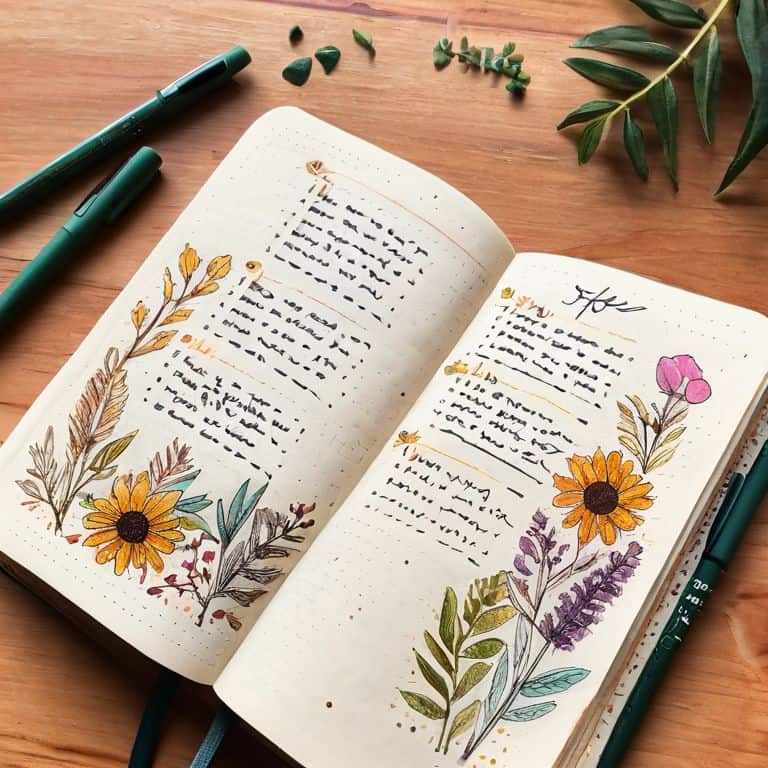
As I delve deeper into the world of bullet journaling, I’ve discovered that custom bullet journal spreads are a game-changer for creatives. By designing spreads that cater to my specific needs, I can tailor my journal to suit my unique planning style. For instance, I have a spread dedicated to tracking my writing progress, which helps me stay focused on my goals. This level of personalization has been instrumental in making my bullet journal a trusted companion for my creative pursuits.
When it comes to finding bullet journal inspiration for beginners, I recommend exploring online communities and social media platforms. Seeing how others use their journals can be a great way to spark new ideas and stay motivated. I also make it a point to try out new creative journaling prompts regularly, which helps keep my journaling practice fresh and exciting. Whether it’s a simple doodle or a more complex spread, I believe that the act of creating something with my own hands is essential to my creative well-being.
To take my journaling practice to the next level, I’ve started experimenting with monthly spread ideas that incorporate different themes and colors. This not only adds a touch of visual appeal to my journal but also helps me stay organized and focused on my monthly goals. By combining these techniques with my existing bullet journaling routine, I’ve been able to create a system that is both beautiful and functional – a true reflection of my creative spirit.
Custom Spreads for Rebels
As I delved deeper into the world of bullet journaling, I discovered the joy of creating custom spreads that reflected my unique needs and personality. For me, this meant designing pages that accounted for my fluctuating creativity and focus. I crafted a “Mood Mandala” spread to track my emotions and energy levels, and a “Brain Dump” page for when my mind felt like a jumbled mess. These bespoke layouts allowed me to tap into my creative potential and stay organized, even on the most chaotic of days.
By experimenting with different layouts and themes, I found that my bullet journal became an extension of myself – a tangible representation of my thoughts, feelings, and artistic expression. I encourage you to do the same: break free from traditional planning structures and create spreads that resonate with your inner rebel. Whether it’s a “Dream Big” page or a “Weekly Wins” tracker, the possibilities are endless, and the freedom to design is yours alone.
Monthly Inspiration for Beginners
As I flip through my bullet journal, I’m reminded of the power of monthly themes to spark creativity. For beginners, I recommend starting with a simple prompt or quote that resonates with your current project or goal. This could be a phrase, a image, or even a color palette that inspires you. I like to collect these prompts in a dedicated spread, where I can reflect on them throughout the month and watch my ideas evolve.
By infusing your bullet journal with monthly inspiration, you’ll find that your creative planning becomes more intentional and focused. It’s amazing how a simple theme can tie together disparate ideas and projects, revealing new connections and insights. For me, this practice has been a game-changer, helping me stay motivated and excited about my work even on the most chaotic days.
5 Essential Tips to Unlock Your Creative Potential with Bullet Journaling
- I only use my bullet journal for tasks that truly spark joy – it’s my sacred space for creativity, not a dumping ground for mundane to-do lists
- I’ve learned to color-code my journal to match my mood and the project I’m working on – it’s amazing how a pop of color can shift my focus
- My weekly spreads are designed around ‘creative sprints’ – dedicating 3 days to intense focus and 4 days to relaxation and rejuvenation
- I include a ‘brain dump’ page in my journal for whenever inspiration strikes – it’s incredible how often a random idea turns into a fully-fledged project
- I review and reflect on my journal entries every Sunday evening, using it as an opportunity to celebrate my accomplishments and adjust my plans for the upcoming week
Key Takeaways for Creative Rebels
I’ve found that using a bullet journal to plan my creative projects helps me stay focused and avoid last-minute scrambles, giving me the space to breathe and actually enjoy the process
By designing custom spreads that reflect my unique needs and interests, I can tap into my inner source of inspiration and bring new ideas to life in a way that feels authentic and meaningful
Remember, the beauty of bullet journaling lies in its flexibility – don’t be afraid to experiment, make mistakes, and evolve your system as you grow and learn, and always keep in mind that it’s a tool to support your creativity, not constrain it
Embracing the Chaos
For me, a bullet journal is more than just a planning tool – it’s a sanctuary where creativity and chaos collide, and beauty is born from the mess.
Audrey Bell
Embracing the Creative Journey

As I reflect on my journey with bullet journaling, I’m reminded of the freedom it’s given me to express my creativity and bring order to my chaotic thoughts. From setting up my first bullet journal to experimenting with custom spreads, I’ve learned that this tool is not just about planning, but about embracing my unique voice and style. Through monthly inspiration and creative sprints, I’ve been able to tap into my imagination and turn my ideas into reality. By following the steps outlined in this guide, I hope you’ll find your own path to unlocking your full creative potential.
As you embark on your own bullet journaling journey, remember that it’s okay to make mistakes and that imperfection is beauty. Don’t be afraid to try new things, experiment with different layouts, and make your journal truly yours. With patience, persistence, and a willingness to take risks, you’ll find that your bullet journal becomes a trusted companion on your creative path, helping you to stay focused, inspired, and committed to your artistic vision. So, go ahead, unleash your creativity, and watch your bullet journal transform into a work of art that reflects your unique spirit and style.
Frequently Asked Questions
How do I balance structure and flexibility in my bullet journal to accommodate my creative planning needs?
For me, it’s all about finding a rhythm between structure and freedom. I achieve this by dedicating certain pages to strict planning and others to spontaneous creativity, allowing my bullet journal to evolve with my needs.
What are some tips for avoiding burnout when using a bullet journal for both personal and professional creative projects?
To avoid burnout, I prioritize ‘intentional rest’ days and schedule ‘creative sprints’ in my bullet journal, allowing me to focus on a single project at a time and maintain a healthy work-life balance.
Can I use a bullet journal in conjunction with other planning tools, such as digital calendars or apps, to enhance my creative planning workflow?
I love mixing traditional and digital tools. I use my bullet journal for creative brainstorming and goal-setting, while my digital calendar keeps me on track with deadlines and appointments. It’s all about finding a balance that works for you – experiment and see what combo boosts your productivity and inspiration.